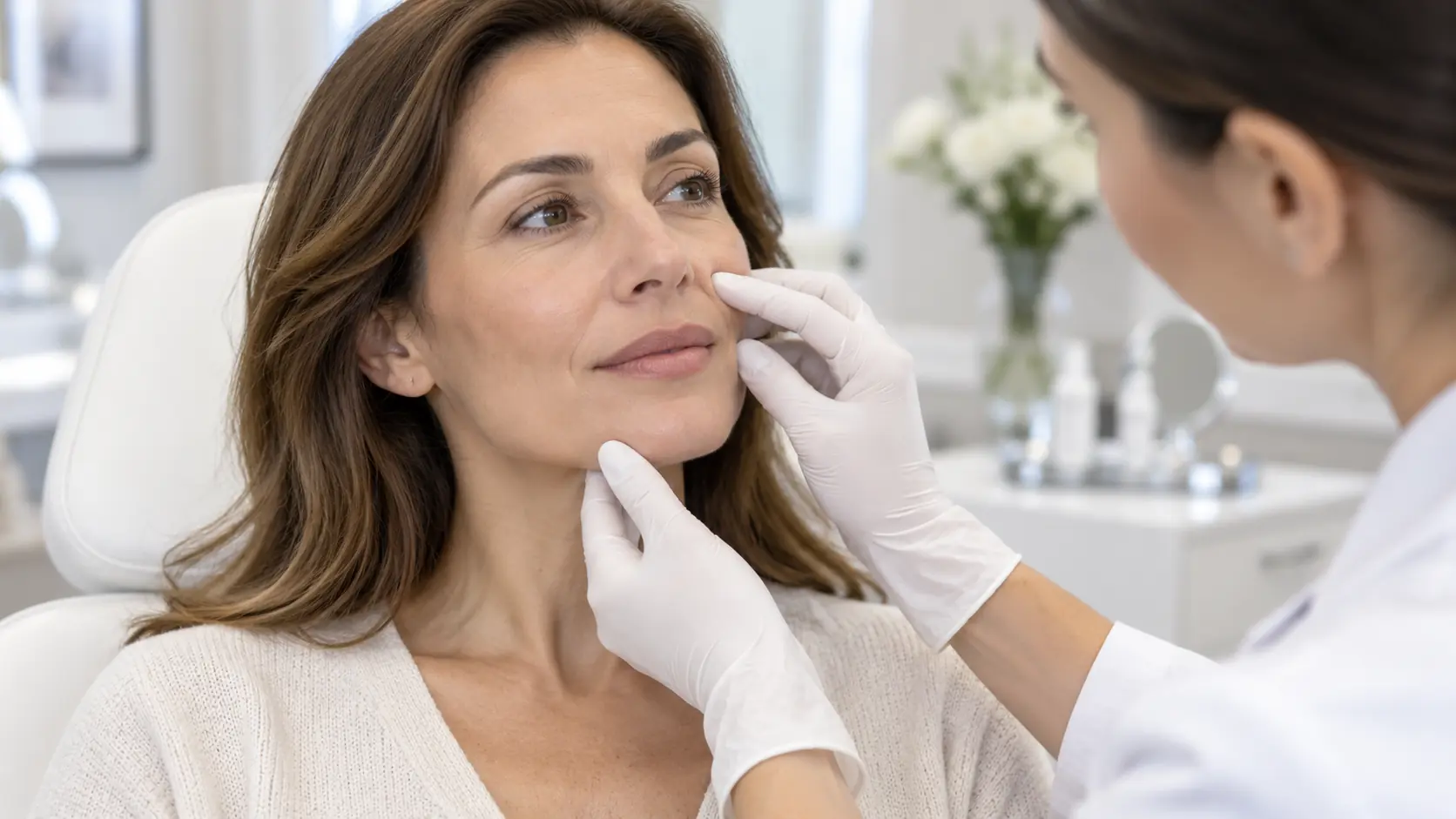
Aftercare for hyaluronic acid in the cheekbones: a complete guide to a perfect recovery
Dr Eva Garrigós · 9 January 2026

Cheekbone filler treatment with hyaluronic acid has become hugely popular in aesthetic medicine because it adds volume, harmonises the face and rejuvenates without the need for surgery. However, the procedure does not end when you leave the clinic. The final result depends, to a large extent, on aftercare following hyaluronic acid in the cheekbones. In this guide we want to answer all your questions and explain what you can do to make your recovery as quick, safe and beautiful as possible.
What happens in the cheekbones after dermal filler treatment
After the injection, the cheekbones go through a short adaptation phase. It may sound a little technical, but it helps to understand it so you know why there is swelling or tenderness.
Normal skin reaction in the first few hours
The first few hours after treatment are usually accompanied by mild swelling, redness and a feeling of pressure. This is completely normal. Hyaluronic acid attracts water, so there may be slightly more volume than intended.
This is where a common question arises: “What if I can feel a lump?”. In most cases it is simply the skin adapting. It is best not to touch the area too much, as this can irritate it further.
Aesthetic changes to expect in the first few days
During the first two or three days you may notice slight asymmetries, one cheek a touch more swollen than the other, or even be able to feel the product. All of this is usually to be expected with this type of procedure and improves on its own as the acid integrates into the tissue.
The first 24 hours: key aftercare to avoid complications
The first day is the most delicate. Much of how the process will evolve is decided here.
Facial hygiene and contact with the treated area
Try not to handle or rub your cheekbones. If you wash your face, use lukewarm (not hot) water and a gentle cleanser. Avoid scrubs and electric brushes. As we like to say: less is more.
Recommended positions for sleeping and resting
Ideally, sleep on your back with your head slightly raised. It is fine if you move during the night, but try to avoid sideways pressure that could shift the newly placed filler.
Using cold compresses: when and how
Cold helps a great deal with swelling. You can apply cold gel packs or ice wrapped in a cloth for 5–10 minutes every hour, but without overdoing it so as not to irritate the skin.
What not to do after cheekbone filler
Some activities can interfere with the result. This is not meant to alarm you; it is simply so that everything goes smoothly.
Physical activity and intense exertion
For the first 48–72 hours it is best to avoid the gym, running, swimming or any intense exercise that increases blood flow and swelling.
Exposure to heat, sun and heat sources
Saunas, steam rooms, sunbeds or even long hours in the sun are not a good idea for at least three or four days. Heat dilates the blood vessels and can make bruising worse.
Alcohol, tobacco and their impact on recovery
Alcohol thins the blood and makes bruising more likely. Tobacco, for its part, reduces tissue oxygenation, slowing down recovery. There is no need to give everything up for ever, just cut back on these habits in the first few days.
Swelling, bruising and discomfort: how to relieve them properly
These side effects are so common that they are almost part of the process.
Normal duration of swelling and bruising
Mild swelling usually lasts between 24 and 72 hours, although in some people it lasts up to a week. Bruises may take a little longer, but can be easily covered with make-up after 48 hours (provided your doctor allows it).
Products and treatments that aid recovery
Some products such as arnica, topical vitamin K or thermal water can help. There are also complementary medical-aesthetic treatments, such as gentle vascular laser, which speed up the disappearance of bruises. Important: do not use anything without checking first if you have any doubts.
Skincare after hyaluronic acid
Although the filler sits deeper than the epidermis, the skin also appreciates a little pampering.
Recommended skincare and ingredients to avoid
Your best allies are moisturising, soothing products with restorative ingredients, such as niacinamide or topical hyaluronic acid. On the other hand, for the first few days it is best to avoid retinoids, chemical exfoliants and any overly harsh cosmetics that could cause irritation.
When to resume your usual facial routine
Most people resume their routine after 4–7 days, depending on how they feel. If you use retinol or exfoliating acids, it is better to wait a little longer so as not to overload the skin while the tissues settle.
Diet and habits that support a better result
This is sometimes overlooked, but recovery is also supported by your lifestyle.
Anti-inflammatory foods and good hydration
Vegetables, fruit rich in vitamin C, omega-3 (oily fish, chia seeds), turmeric… An anti-inflammatory diet does not work miracles, but it all adds up. And hydration is key: hyaluronic acid retains water, so drinking enough helps the result look plumper.
Supplements and medication: what to discuss with your specialist
If you take anticoagulants, anti-inflammatories or supplements such as ginkgo biloba or vitamin E, always mention it to your doctor, as they can affect bruising.
Warning signs after cheekbone treatment
Although hyaluronic acid cheekbone filler is very safe, it is worth knowing how to spot when something is not right.
Symptoms that mean you should come to the clinic
Come to the clinic if you notice severe pain, sudden changes in skin colour (pale or very purple), excessive heat, necrosis or fever. These cases are rare, but you need to act quickly.
The difference between normal side effects and complications
Normal: swelling, tender injection points, some asymmetry or small bruises.
Not normal: pain that does not ease with painkillers, progressive and aggressive swelling, loss of sensation, worrying colour changes or signs of infection.
How long the results last and how to maintain them
Here comes one of the most frequently asked questions after treatment.
Factors that influence how long the filler lasts
Hyaluronic acid in the cheekbones usually lasts between 8 and 18 months, although this depends on the quality of the product, your metabolism, your age, your skin and your lifestyle. Very intense exercise or a very fast metabolism can break it down sooner.
Recommended maintenance and touch-ups
Touch-ups are usually lighter and further apart. Sometimes small amounts every so often are enough to maintain volume and facial harmony without abrupt changes.
Frequently asked questions about aftercare following hyaluronic acid in the cheekbones
When will I see the final result?
After roughly 10 to 20 days, once the swelling has gone down and the product has integrated.
Can I massage the treated area?
As a general rule, no, unless your doctor tells you to. Massage can shift the filler if done too soon or too firmly.
Is it normal to be able to feel the product?
Yes, at first it is common to notice a slight firmness or raised area. Over the following days it disappears almost completely.
If you are considering treatment or have more specific questions, we will be delighted to help. And if you have just had it done, remember: following the aftercare instructions makes the difference between a good result and an excellent one.
[googlesitekit-end-of-content]