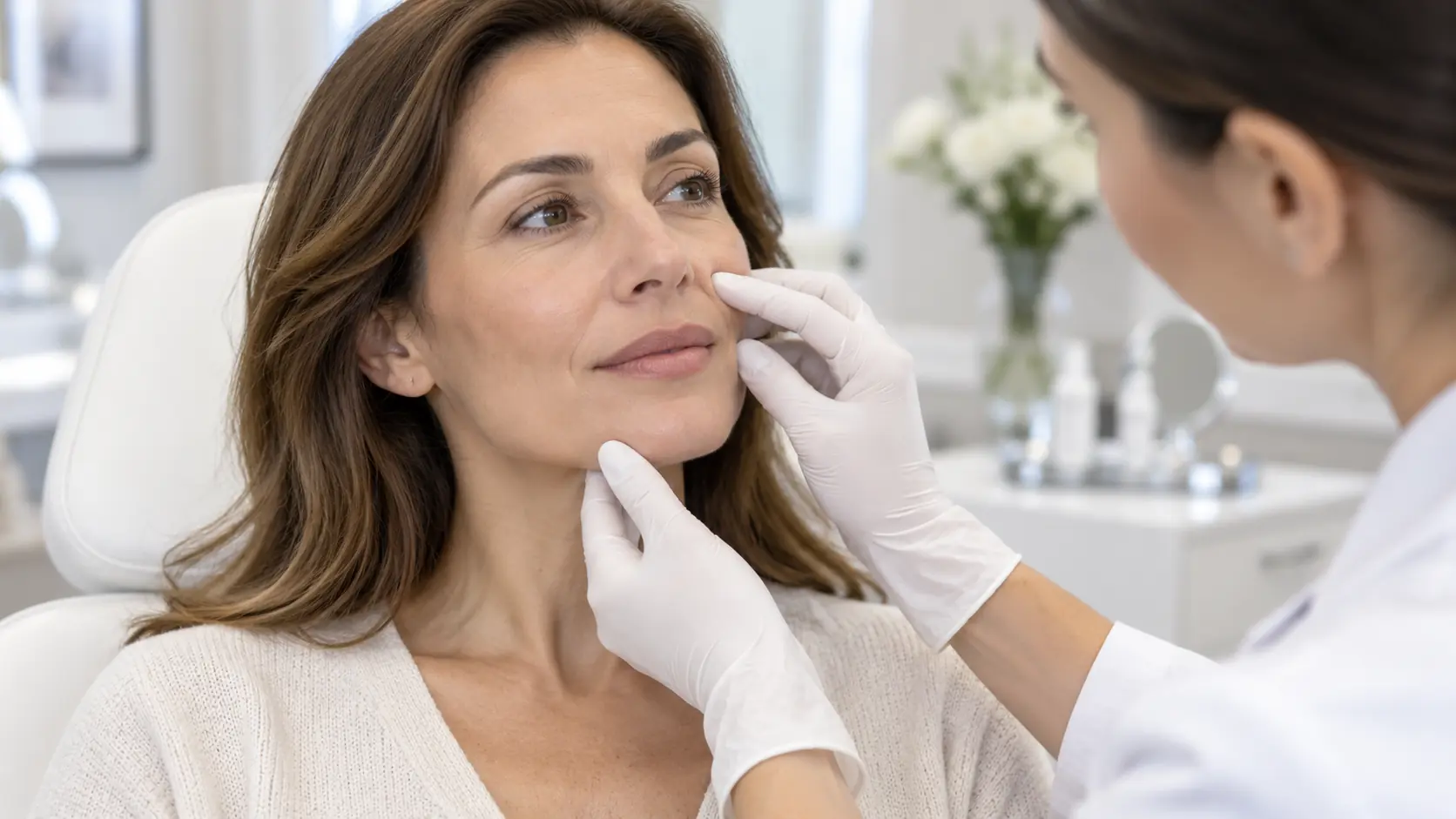
What facial neuromodulators are and how they transform your expression without losing naturalness
Dr Eva Garrigós · 22 October 2025

Introduction: the aesthetic revolution of neuromodulators
In recent years, aesthetic medicine has undergone a genuine revolution. We have moved from aggressive, surgical treatments to minimally invasive, quick solutions with natural results. It is no longer about changing the face, but about refreshing the expression and restoring its vitality without altering its essence. In this context, facial neuromodulators have taken centre stage.
At Dr Eva Garrigós’s clinic, we see it every day: patients who want to look better without losing their identity. And that is where neuromodulators make the difference: they correct, soften and prevent without anyone noticing “what you have had done”, only that “you look great”.
What neuromodulators are and how they work on the face
Neuromodulators are substances that act directly on the communication between nerve and muscle. Their role is to temporarily relax the facial muscles, preventing them from contracting excessively and, over time, creating wrinkles or deep expression lines.
In other words, they do not “fill” or “tighten”: they simply help the muscle to rest, allowing the skin to look smoother, more relaxed and younger.
Mechanism of action: relaxing the muscle and smoothing wrinkles
When a facial neuromodulator is applied to a specific area (such as between the brows or the forehead), it selectively blocks the nerve signal that tells the muscle to contract. By reducing that contraction, the wrinkle gradually softens and the expression takes on a more rested, harmonious look.
The effect is not immediate: it usually begins to show 3 to 7 days after treatment, reaching its peak at two weeks.
The difference between neuromodulators and dermal fillers
This is one of the most frequent questions. Neuromodulators relax the muscles, while dermal fillers (such as hyaluronic acid) provide volume and structure.
In other words, neuromodulators correct dynamic wrinkles (those that appear when we make facial expressions), while fillers treat static wrinkles or areas that have lost support, such as the cheekbones or lips.
In many cases, the most effective treatment combines both: muscular harmony + natural volume.
The main aesthetic uses of facial neuromodulators
Neuromodulators do not only soften wrinkles; they are also used to prevent ageing and to balance facial expression. Every face has its own map of movements, which is why treatment must always be personalised.
Forehead, frown lines and crow’s feet: the classics of facial rejuvenation
These three areas are the most commonly treated, and not by chance. They are areas where the muscles work constantly, even when we are not aware of it.
- Forehead: helps soften horizontal lines without losing mobility.
- Frown lines: removes a permanently “angry” or “worried” look.
- Crow’s feet: brings freshness to the eyes and a kinder expression.
When performed with precision, the result is not a frozen face, but a relaxed, natural expression.
Gummy smile, chin and neck: advanced applications and natural results
In addition to the classic areas, neuromodulators are also used in other, more specific areas:
- Gummy smile: reduces excessive gum exposure when smiling.
- Dimpled chin: softens the “orange peel” appearance.
- Neck (Nefertiti lift): redefines the facial contour and improves skin tension.
These are treatments that require an expert hand and in-depth anatomical knowledge, but the results can be truly transformative.
The benefits of neuromodulators for the skin and expression
Beyond the immediate aesthetic effect, neuromodulators offer long-term benefits:
- Preventing ageing: by reducing repeated muscle movement, we prevent future wrinkles from forming.
- Improving the overall appearance of the skin: the face looks more rested and radiant.
- Quick recovery with no time off work: you can return to your routine the same day.
- Gradual, controlled results, always adjustable to your preferences.
In short, neuromodulators are a tool for facial wellbeing, not just an aesthetic treatment.
How long the effects last and how often treatment is recommended
The results of neuromodulators usually last between 4 and 6 months, although this depends on factors such as each person’s age, skin type, metabolism and muscle strength.
Over time, the muscle regains its usual activity and wrinkles may reappear, but always in a softer form.
At Dr Eva Garrigós’s clinic we usually recommend two sessions a year to maintain a natural, consistent effect. And, importantly: continued use does not “ruin” the face; on the contrary, it helps preserve the skin’s elasticity and smoothness.
Side effects and aftercare
Neuromodulators are very safe treatments, provided they are administered by expert hands using approved products.
The most common side effects are mild and temporary:
- Redness or slight swelling at the injection point.
- The odd small bruise.
- A feeling of tightness in the first few hours.
To optimise the results, we recommend:
- Not lying down or doing intense exercise for 4 hours afterwards.
- Avoiding massaging or rubbing the treated area.
- Not exposing yourself to intense heat (sauna, direct sun) on the same day.
Within a few days, the skin regains its natural appearance and the effect becomes more evident.
The most widely used neuromodulators in facial aesthetics
In aesthetic medicine there are different types of approved neuromodulators. The best known are:
- OnabotulinumtoxinA (the most widely used and best known for its efficacy and safety).
- AbobotulinumtoxinA and IncobotulinumtoxinA, with slight variations in their formulation.
They all work in a similar way, although each has differences in diffusion, potency or duration. The choice always depends on the personalised diagnosis we carry out in consultation.
Myths and truths about neuromodulators
There are many misconceptions about this treatment, and it is time to dispel them:
- “They leave your face frozen”: False. With the right dose, the face keeps its expressiveness.
- “They are only for women”: Not true either. More and more men are turning to neuromodulators to improve their appearance discreetly.
- “They are addictive”: They do not create dependency. Simply, when the effect wears off, you can decide whether or not to repeat.
- “They prevent wrinkles”: True. Using them preventively helps keep the skin smoother and younger.
Ultimately, it is not about “changing your face”, but about preserving the best version of you.
Are you a good candidate for this treatment?
If you notice marked expression lines, a tired look, or you simply want to prevent ageing without resorting to surgery, you probably are.
The best candidates are people:
- From the age of 25–30, when the first dynamic wrinkles start to become visible.
- In good general health.
- Looking for natural, reversible results.
At our clinic, we always carry out a personalised assessment to tailor the doses and areas to your needs and your unique features.
Conclusion: the key lies in naturalness and expert hands
Facial neuromodulators are one of the most effective and safest tools for rejuvenating the expression without losing naturalness. But, as with everything in aesthetic medicine, the secret lies in knowing how to use them with judgement, sensitivity and experience.
At Dr Eva Garrigós’s clinic, we believe that beauty is not about changing who you are, but about enhancing your authenticity. That is why every treatment is personally designed, with the utmost precision and care.
If you are thinking of taking the step and discovering how neuromodulators can transform your expression naturally, we invite you to visit us and get to know us.
Book an appointment at our aesthetic medicine clinic and take the first step towards a fresher, more radiant version of yourself.
[googlesitekit-end-of-content]