Which facial treatment to choose if you have pigmentation, redness or enlarged pores
Dr Eva Garrigós · 15 April 2026
When you look in the mirror and notice that your skin no longer looks even, the same question usually comes up: which facial treatment is really right for me? And of course, it is no small question. Treating sunspots is not the same as treating persistent redness or enlarged pores that make the texture look uneven.
We see it a lot in clinic: people who arrive thinking they need “a laser”, “a deep cleanse” or “something to close pores”, when in fact their skin is asking for something else. Sometimes the main problem is not the most visible one. Or, to put it another way: the skin does not always need the most famous treatment, but the most suitable one.
At Dr Garrigós Clinic, this is precisely the idea we work from. We personalise facial treatments according to the needs of each skin, and our approach begins with an in-depth analysis and a tailored plan, not with standard solutions. Our facial range also includes options such as peels, Aquapure, Dermapen, intense pulsed light and even OBSERV 520X skin diagnosis.
Why not all skin imperfections are treated in the same way
Although from the outside it may all look like “uneven skin”, there are very important differences between one concern and another. Pigmentation has a different origin from redness, and enlarged pores do not respond in the same way as dull skin or rough texture either.
For example, someone may think they have pigmentation when what actually predominates is post-acne inflammation. Someone else may believe their pores are very open, when what is really going on is a combination of excess sebum, loss of firmness and surface dehydration. And yes, this happens far more often than you might think.
That is why we insist so much on one idea: a facial treatment should not be chosen on the visible symptom alone. You need to understand what is happening underneath. That nuance makes the difference between real improvement and stringing sessions together without clear criteria.
Before deciding: what is causing your pigmentation, redness or the appearance of your pores
Sun-induced pigmentation, melasma or post-inflammatory marks
Not all pigmentation is the same. The most common types are:
- Sunspots, related to cumulative sun exposure.
- Melasma, more closely linked to hormonal factors, genetic predisposition and ultraviolet radiation.
- Post-inflammatory marks, which appear after spots, irritation or lesions.
This matters a great deal because not all treatments work equally well in every case. Some pigmentation responds very well to skin renewal, while other types require a more gradual, carefully controlled approach supported by home care.
Sensitive skin, couperose or a tendency to rosacea
When it comes to redness, it is also worth being precise. Occasional redness caused by cold, heat or exercise is not the same as skin with visible vessels, constant sensitivity or a tendency to rosacea.
With this kind of skin, going too fast is usually a mistake. Sometimes the aim is not to “do a lot” in one session, but to do just enough to improve the skin without destabilising the skin barrier. And that changes the plan completely.
Excess sebum, uneven texture or loss of firmness
Enlarged pores usually appear for several reasons at once:
- High oil production.
- A build-up of keratin and impurities.
- Loss of elasticity around the pore.
- Photoageing.
- Residual acne marks.
That is why, when someone wants to “close their pores”, we usually explain something very simple: pores cannot be erased, but they can look much less visible when you improve texture, regulate sebum and stimulate skin renewal.
How to know what your skin really needs
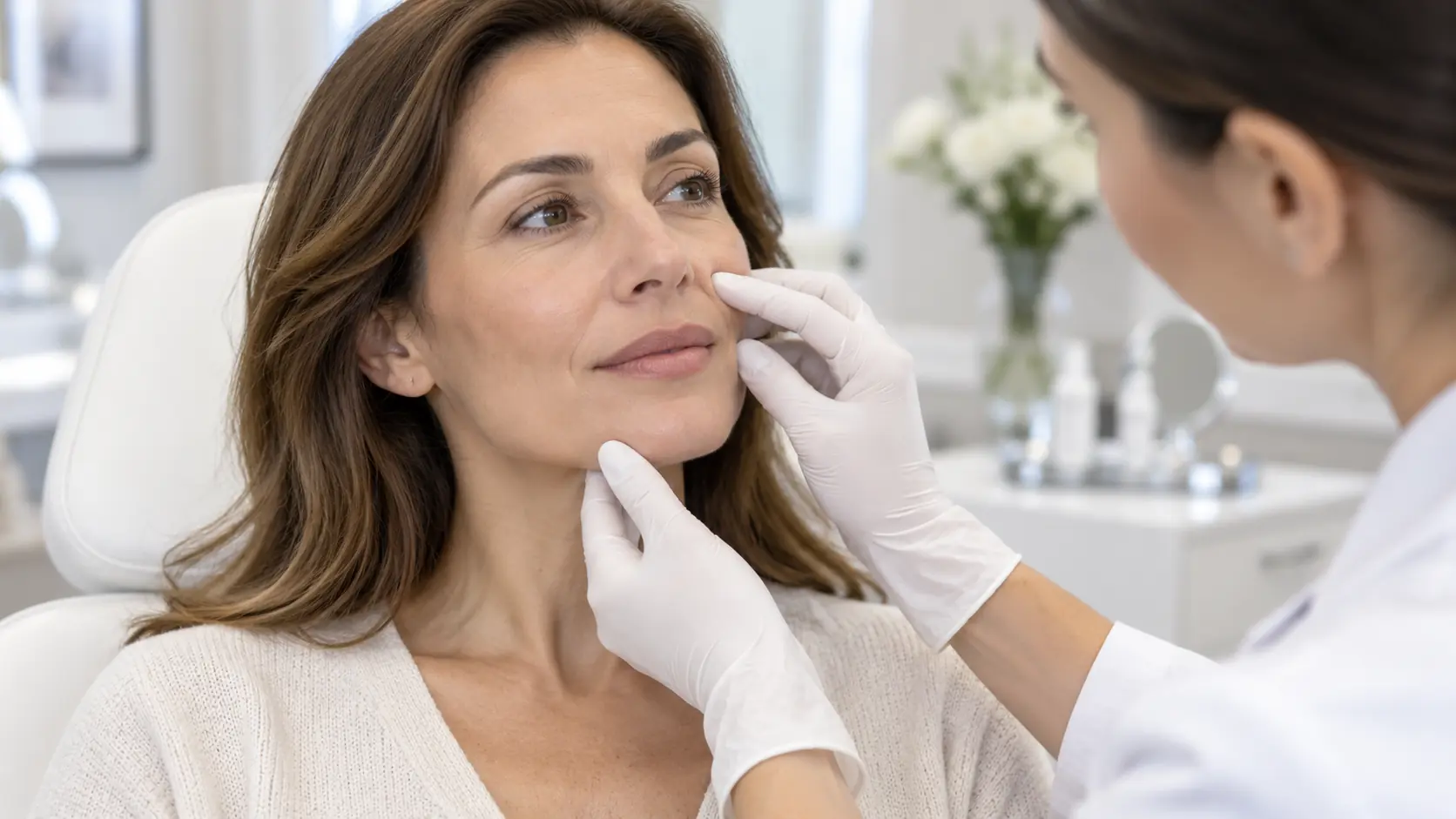
The importance of a personalised facial diagnosis
This is probably the most important part of the whole article. Before talking about peels, IPL, Dermapen or facials, we need to talk about diagnosis.
Every skin tells a unique story, and our approach begins with an in-depth analysis to design a personalised treatment.
A well-performed facial assessment makes it possible to see:
- whether the pigmentation is superficial or deeper,
- whether the redness is vascular, inflammatory or reactive,
- whether the enlarged pore is due to oiliness, laxity or both,
- and whether sensitivity, pigmentation or texture should be treated first.
It seems obvious, but it is often overlooked. And then come the disappointments.
Which factors change the choice of treatment
The choice does not depend only on the main problem. Other factors also come into play:
- your skin phototype,
- whether your skin is sensitive or resilient,
- whether you tan easily,
- whether it is summer or winter,
- whether you are prone to irritation,
- whether you can allow yourself a few days of recovery,
- and whether you are looking for a gradual or a more visible change.
Yes, that is a lot of factors. But that is exactly why copying the treatment that worked for someone else does not usually work.
When it is better to combine several techniques instead of just one
In quite a few cases, the best option is not a single treatment but a well-planned combination. For example, you might first work on cleansing and balancing the skin, then on pigmentation or redness, and later on fine texture or radiance.
It is not always necessary to do everything at once. In fact, sometimes it is better not to.
If your main concern is pigmentation: options to even out skin tone
When depigmenting peels work best
Depigmenting peels usually work very well when there is:
- a dull complexion,
- superficial pigmentation,
- post-inflammatory marks,
- or skin that needs renewing.
They help speed up controlled exfoliation, improve texture and promote a more even tone. They can also be a good starting point when we want to improve the skin without going straight to light-based techniques.
However, not every peel is suitable for every kind of pigmentation. With melasma, for example, particular caution is needed. A poorly indicated or overly aggressive peel can irritate the skin and make the condition worse. This is not often mentioned, but it is worth saying.
When intense pulsed light can be a good option
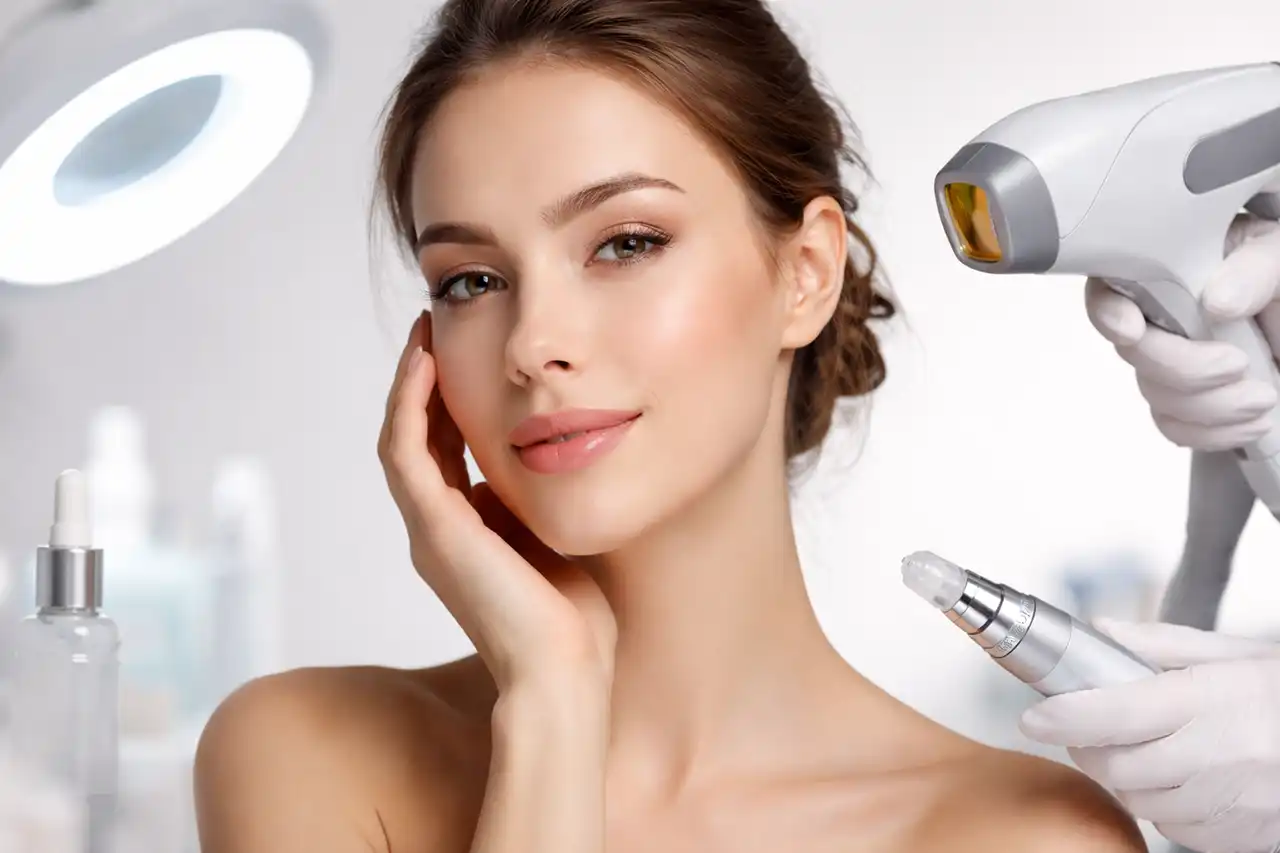
Intense pulsed light (IPL) is a non-invasive technique indicated for improving skin quality and treating pigmentation, redness, enlarged pores and signs of ageing. Its benefits include a more even skin tone, reduced redness, improved texture and collagen stimulation.
That is why, when sunspots, uneven tone and a certain lack of radiance predominate, it is usually a very interesting option. It is also particularly appealing for anyone wanting to tackle several concerns at once without a long recovery time.
What results you can expect depending on the type of pigmentation
Here it is worth being honest. Not all pigmentation responds in the same way or at the same speed.
- Sunspot: usually improves well with depigmenting treatments and light-based technologies.
- Post-inflammatory mark: improves when we control inflammation and renew the skin.
- Melasma: requires more strategy, more consistency and better sun-protection habits.
In short: a great deal of improvement is possible, but not everything is always “erased” in a single session.
If redness is your biggest concern: how to calm and improve facial redness
The difference between occasional and persistent redness
Occasional redness comes and goes. Persistent redness stays, returns easily or comes with visible vessels, heat, itching or tightness.
When redness is persistent, the first thing is not to irritate the skin further. It may sound trivial, but the problem is often made worse by frequent exfoliation, overly active skincare or treatments that do not respect the skin's sensitivity.
Treatments that help reduce visible vessels and a dull complexion
For skin with a vascular component, IPL is usually a particularly interesting alternative. It is an effective option for treating redness and visible capillaries, as well as improving the overall evenness of the face.
That said, it is not all about devices. Sometimes it is also advisable to strengthen the skin barrier, reduce inflammation, simplify your routine and work gradually. Sensitive skin really appreciates not being forced.
Which habits make skin sensitivity worse
There are some very common small mistakes that make redness considerably worse:
- using very hot water,
- overusing exfoliants,
- mixing too many actives,
- not using daily sun protection,
- changing products all the time,
- and becoming obsessed with “over-cleansing”.
Yes, over-cleansing is a thing. And yes, it can leave your skin in a real state.
If you have enlarged pores and uneven texture: how to refine the skin without losing naturalness
Why pores look more open
Pores are more noticeable when there is oiliness, trapped dirt, dehydration, loss of elasticity or photoageing. It is not always a hygiene problem, and that deserves to be said clearly.
Many people with enlarged pores wash their face a great deal, use astringent toners and exfoliate constantly. The result? More irritation, more imbalance and, sometimes, worse texture.
Techniques that improve texture and stimulate skin renewal
We offer treatments such as peels, Aquapure, Dermapen and deep-cleansing facials, alongside IPL.
Where might each one fit in?
- Facial cleansing and Aquapure: when there is congestion, excess sebum and a need to oxygenate the skin.
- Medical peels: when we want to smooth, renew and improve tone and texture.
- Dermapen: when the aim is to work on texture, fine marks and regenerative stimulation.
- IPL: when, as well as pores, there is associated redness, pigmentation or photoageing.
When to prioritise cleansing, regeneration or biostimulation
If the skin is congested, we usually start by balancing and cleansing it. If it is already stable but has marks or an uneven surface, it makes sense to prioritise regeneration. And if the problem is more one of fine laxity and loss of skin quality, biostimulation becomes more important.
We do not always start in the same place. And that is the crux of it.
What if you have several concerns at once?
What to do when pigmentation and redness occur together
This is quite common. In fact, in many mature or photoaged skins they appear together. In such cases, IPL can make a lot of sense because it works on several problems in parallel: pigmentation, the vascular component and overall skin quality. The clinic expressly highlights this in its description of the treatment.
How to address enlarged pores together with marks or a lack of radiance
A phased approach usually works very well here:
- cleanse and balance,
- renew and refine texture,
- boost radiance,
- maintain with a suitable routine.
It is a less eye-catching plan than saying “do this and you're done”, but far more realistic.
The advantages of a progressive facial plan tailored to your skin
The biggest advantage is that it reduces the risk of irritation and makes it easier to stick with. The skin responds better when we respect its pace. And you find it easier too when you understand what we are doing and why.
Which facial treatment usually suits your skin type best
Sensitive skin
It needs gentleness, control of inflammation and a great deal of personalisation. Less impulsiveness and more strategy.
Combination or oily skin
It usually benefits from medical facials, suitable peels and treatments that regulate sebum without over-drying.
Mature skin or skin with signs of photoageing
It usually needs a combination of tone evening, texture improvement and collagen stimulation.
Dull skin after summer, stress or hormonal changes
Here we aim to restore radiance, recover hydration and reorganise the routine. Honestly, sometimes that alone makes a huge difference to the face.
What to bear in mind before and after your session
Preparation beforehand to avoid irritation
Before any facial treatment, it is best to avoid self-tanners, intense sun exposure and irritating products if you are advised to do so in clinic. It is also important to arrive with stable skin, without active breakouts or recent damage.
Aftercare to enhance results
Afterwards, daily sun protection is key. So is following a simple, repairing routine that is consistent with the treatment carried out. This is not the time to experiment with three new serums.
When you will notice the improvement and how many sessions are usually recommended
It depends on the treatment and the problem being treated. In the case of IPL, the clinic indicates that recovery is usually immediate, with possible mild redness lasting a few hours, and that between 3 and 6 sessions spaced 3 to 4 weeks apart are generally recommended, depending on how the skin responds.
Common mistakes when choosing a treatment without a medical assessment
One of the biggest mistakes is thinking that a facial will fix everything. Another is assuming that all pigmentation is treated the same way. And another, quite common one, is looking for an aggressive treatment for skin that first needs calming down.
We also meet people who choose purely on trends: “I've heard about this treatment”, “my friend had it done”, “I saw it on social media”. And well… that can point you in a direction, but it should not decide for you.
Frequently asked questions about pigmentation, redness and enlarged pores
Can all three be treated in the same session?
Sometimes, yes, especially when we use versatile techniques and the skin allows it. But it is not always the best approach.
Are all facial treatments suitable for sensitive skin?
No. In fact, with sensitive skin you have to be far more selective.
Does pigmentation come back after treatment?
It can reappear, especially if you do not keep up good sun protection or if there is a hormonal predisposition.
Which option is best if I want to improve my skin with no recovery time?
It depends on your case, although non-invasive, progressive treatments are usually the most compatible with a normal routine. According to the clinic itself, IPL has immediate recovery in most cases.
The best facial treatment is the one that suits your skin, not the most famous one
If you have read this far, you have probably already grasped the central idea: there is no single best facial treatment for pigmentation, redness or enlarged pores. There is the best one for you, for your skin type, for the current state of your skin and for the problem that really predominates.
Sometimes it will be a peel. Other times, intense pulsed light. Other times, starting with cleansing, regeneration or a progressive combination. What matters is not choosing quickly. What matters is choosing well.
And this is where, honestly, a good diagnosis changes everything. Because when we understand what the skin really needs, we stop improvising. And that is exactly when the real results begin.
[googlesitekit-end-of-content]