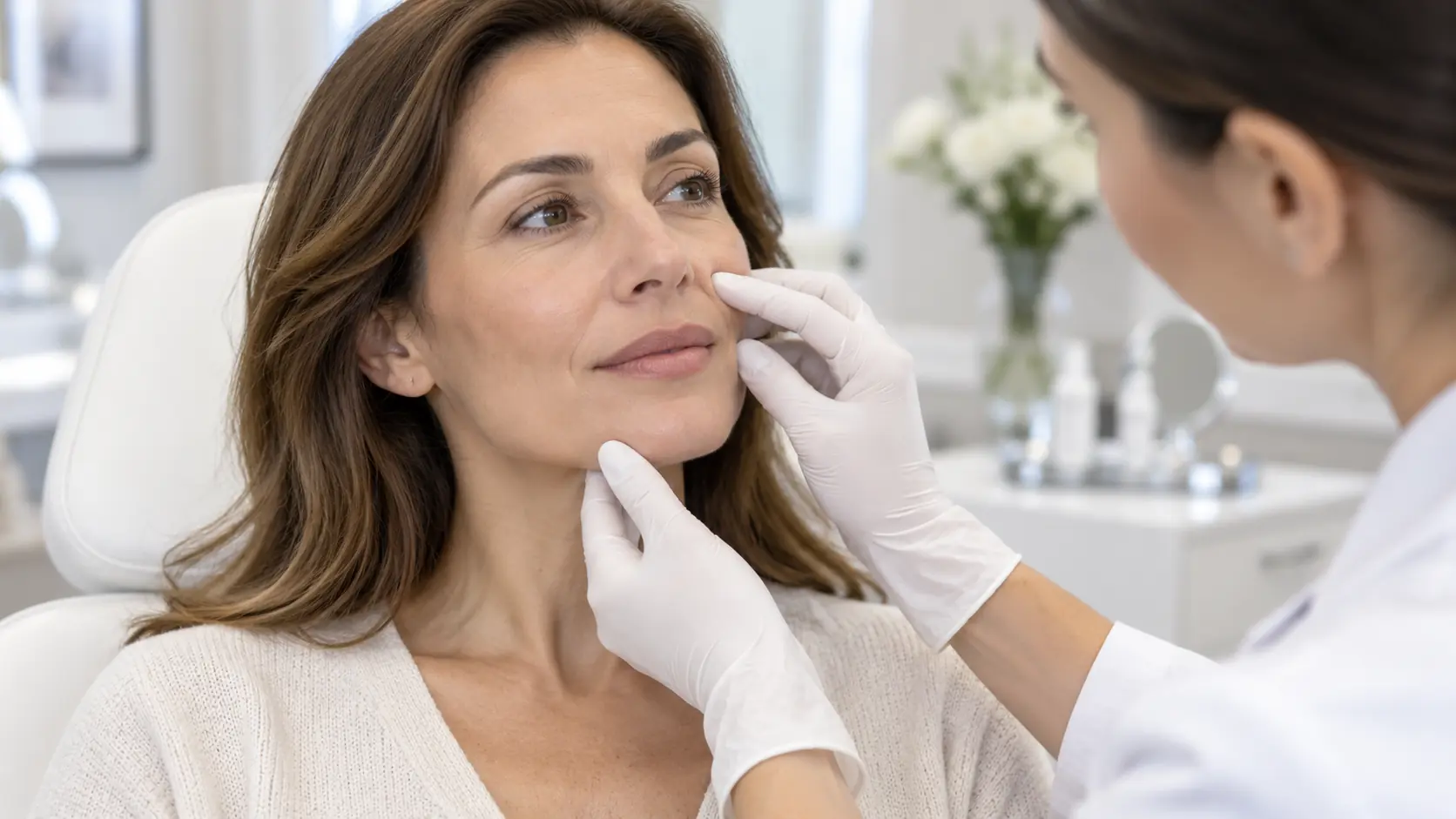
How to correct facial asymmetry: causes, solutions and effective treatments
Dr Eva Garrigós · 9 January 2026

Facial asymmetry is much more common than we tend to think. If you have ever caught yourself looking at a photo and noticing that one side of your face looks different from the other, you are not alone. It happens to all of us; in fact, perfect symmetry does not exist. However, there are times when that difference becomes more noticeable and can affect the harmony of the face or even chewing, your smile or your expression.
In this article we want to explain how to correct facial asymmetry effectively, from the most common causes to the medical and surgical treatments we use in aesthetic medicine. Our aim is to help you understand what options exist, when intervention is needed and what expectations are realistic.
What facial asymmetry is and why it occurs
Facial asymmetry refers to a lack of balance between the structures of the face: bones, muscles, soft tissue and skin. It can show in the nose, cheekbones, jaw, eyes, mouth or even the overall contour.
Differences between mild and severe facial asymmetry
We can distinguish between mild asymmetries, which are only noticeable when you look closely or in certain poses, and severe asymmetries, which are visible both from the front and in profile. The former usually require no treatment and can even be attractive. The latter, by contrast, are usually caused by bone, muscle or dental changes that are worth assessing.
Congenital vs. acquired asymmetry
Congenital asymmetry is present from birth or childhood, whereas acquired asymmetry appears over time due to habits, trauma, ageing or muscle imbalances. This distinction is important because it determines the therapeutic approach.
Main causes of an asymmetrical face
A lack of facial balance can have a great many origins. Some are structural and others functional.
Genetic factors and bone development
A large proportion of asymmetries come from genetics. The shape of the jaw, the projection of the cheekbones or the width of the nose are inherited. In other cases, bone development during childhood or adolescence does not happen evenly.
Daily habits that affect facial symmetry
Something as simple as always resting your head on the same hand, always sleeping on one side or chewing only on one side can alter the muscles over time. These are small details that go unnoticed but add up.
Bruxism, posture and muscle tension
Bruxism, neck tension or poor posture at the computer make certain muscles work harder than others. The result? One side of the face can become fuller, more defined or stiffer than the other. It is not unusual to see jaw asymmetries linked to stress.
Trauma, surgery and dental problems
A blow, a fracture or dental work can change the bite or the position of the jaw. We often find asymmetries that begin after orthodontic treatment, tooth extraction or an accident.
How to tell whether your facial asymmetry needs correcting
Not every imbalance needs treatment. Sometimes it is a matter of perception or self-esteem.
Visible signs in the mirror or in photographs
A simple way is to look at photos taken from the front and in profile. If you notice that the jaw is shifted, that one eye looks more closed or that one cheekbone clearly stands out, a professional assessment could be useful.
When to see a specialist
You should seek advice when the asymmetry causes aesthetic discomfort, affects your bite or chewing, causes muscle pain or affects your day-to-day life. We always recommend a personalised examination.
Facial exercises to improve facial symmetry
Many patients ask us about facial exercises and whether they really work.
Facial exercise: what it can and cannot correct
Facial exercise can improve muscle tone, boost circulation and wake up muscles we rarely use. However, it is of limited use for changing bone structures, correcting the bite or altering the shape of the jaw. It is worth knowing what to expect.
A basic routine to balance the facial muscles
A useful routine might include:
- Activating the masseter on the less dominant side
- Gentle jaw mobility
- Exercises for the orbicularis and zygomatic muscles
- Relaxing the temporal and trapezius muscles
Nothing miraculous, but done properly it can help soften mild differences.
Non-invasive treatments to correct facial asymmetry
In aesthetic medicine we have very effective tools to balance the face without the need for surgery. Here we are talking about mild or moderate cases.
Hyaluronic acid and neuromodulators
Hyaluronic acid allows us to add volume to hollow areas or compensate for bone differences.
Neuromodulators, such as botulinum toxin, help relax overactive muscles, especially in cases of bruxism or a lopsided smile.
In some patients we combine both to achieve overall facial harmonisation. If you would like to know more, take a look at our facial harmonisation treatments.
Orofacial physiotherapy and osteopathy
Specialised physiotherapy can correct muscle tension and postural patterns that cause asymmetries. It works on the muscles of the jaw, neck and head.
Orthodontics and jaw alignment
Orthodontics doesn't just move teeth; it also changes the bite and the position of the temporomandibular joint. This can be key to improving symmetry.
Medical and surgical options for more complex cases
When the differences are structural and affect the bone, it may be necessary to consider advanced medical options.
Orthognathic surgery: when is it necessary?
Orthognathic surgery is used when there is an alteration of the upper or lower jaw that cannot be compensated for in any other way. It is not a decision to be taken lightly, but it can radically change facial harmony and chewing function.
Results, risks and the recovery process
Results are usually very good, although they require a process of study, planning, surgery and recovery that can take months. Like any surgical procedure, it carries risks that must be explained clearly.
How long it takes to notice the correction of facial asymmetry
Timescales vary enormously depending on the treatment.
Short-, medium- and long-term results by treatment
- With neuromodulators: visible results in 7–15 days
- With hyaluronic acid: immediate effect, at its best after 2–3 weeks
- With physiotherapy or orthodontics: months or even years
- With surgery: definitive changes once recovery is complete
Tips to stop facial asymmetry getting worse
Postural habits and daily facial care
Avoiding always sleeping on the same side, chewing on both sides, watching your posture at the computer or doing neck stretches can make a difference.
The importance of rest and dental health
Sleep quality, stress management and good dental care have an enormous influence on facial harmony. Sometimes we underestimate the basics.
Frequently asked questions about correcting facial asymmetry
Can facial asymmetry be corrected without surgery?
Yes, in many cases we can improve it with hyaluronic acid, neuromodulators, physiotherapy or even orthodontics.
Is it normal to have an asymmetrical face?
Absolutely. Nobody has perfect symmetry. The question is whether it affects your appearance or function.
Do facial exercises really work?
They can help in mild cases, but they are no substitute for medical treatment when there is a structural imbalance.
If you have read this far, you are probably wondering whether your facial asymmetry deserves attention. Our advice is to find out more, observe yourself and, if you need to, ask for a professional assessment. Facial harmonisation is not just about aesthetics; it is also about well-being, function and self-confidence.
If you wish, we can advise you in person and study your case individually.
[googlesitekit-end-of-content]