Microneedling: what it is, how it works and whether it is worth it for your skin
Dr Eva Garrigós · 5 March 2026
If you have found your way here, it is because, one way or another, you have heard of microneedling (yes, sometimes you will see it written as micro needling or even “micro-needling”, but you know what we mean). And most likely you are looking for the same thing as almost everyone: to improve texture, refine pores, soften marks (acne, fine scars) and gain radiance… without having to undergo an aggressive treatment or spend weeks “hiding away”.
At the aesthetic medicine clinic of Dr Eva Garrigós we explain it like this: microneedling is a simple technique in concept, but a very powerful one when done well. And, be warned, it can also be a disaster when improvised at home without any control. We are going to tell you everything clearly, thoroughly and without hype, so you know whether it suits you and how to get off to a good start.
What exactly is microneedling and why has it become so popular?
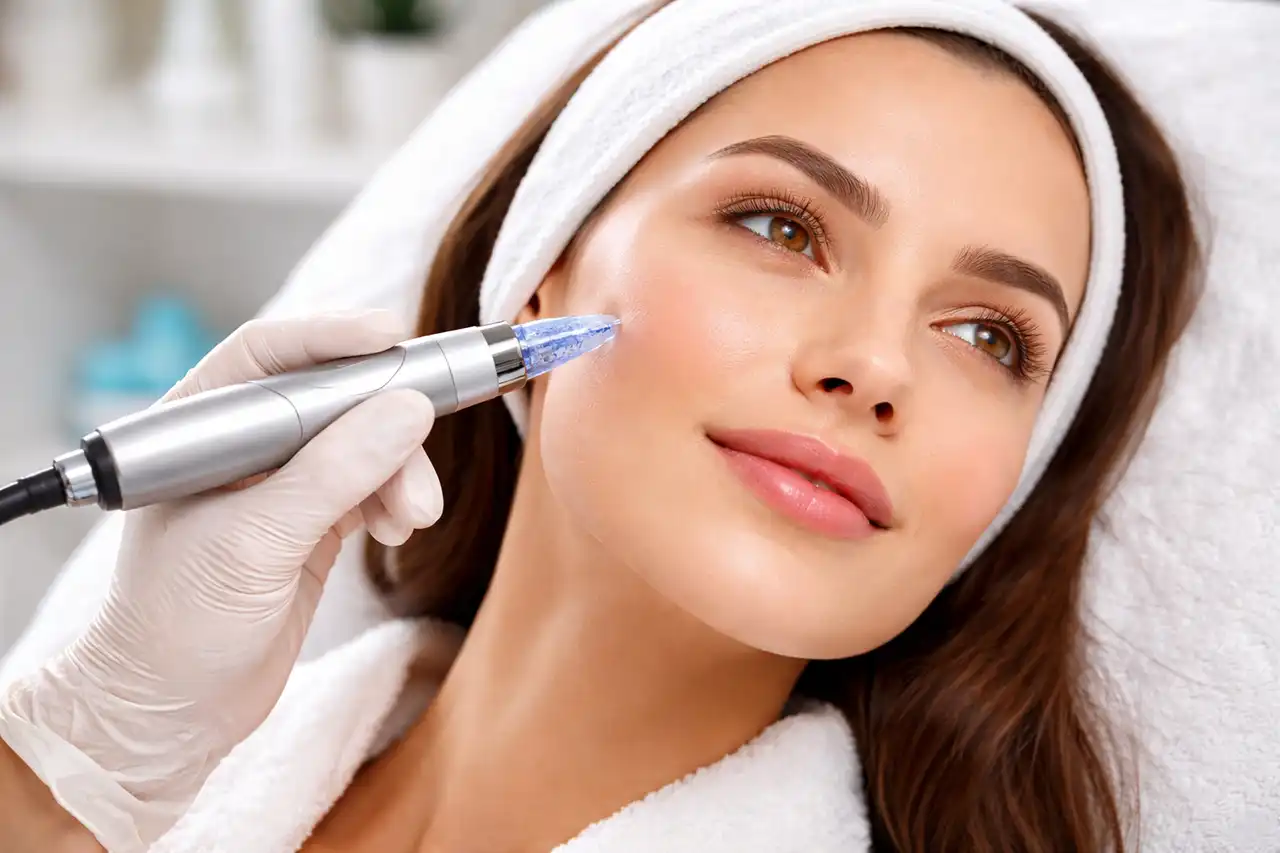
Microneedling is a treatment that uses a device with (very fine) microneedles to create controlled micro-punctures in the skin. It is not “pricking for the sake of it”: the point is that these micro-injuries, made at the right depth and under hygienic conditions, trigger a natural response in the body.
The result? The skin “springs into action” and begins a repair process that involves, among other things, more collagen and elastin. And in real life, that usually means skin that is more even, firmer and better looking overall.
It has become popular for several reasons:
- Because it is versatile: it can be used on the face, neck, décolletage and even the body (depending on the case).
- Because it is gradual: it does not promise magic in one session, but the changes add up.
- Because it fits the “healthy skin” trend (less make-up, more real glow).
- Because it combines well with skincare protocols and other medical treatments.
And yes, it has also gone viral because there are very cheap rollers online… but we will talk about that further down, as there is some small print here.
What it is for: real benefits (texture, pores, marks and radiance)
Let us get practical. What is it really for?
- Uneven texture: “grainy” skin, visible pores, uneven surface.
- Enlarged pores (especially on the cheeks and T-zone): they do not vanish as if by magic, but they look visibly refined.
- Post-acne marks and superficial scars: gradual improvement, especially in skin that responds well to collagen stimulation.
- Fine lines (not deep wrinkles): it helps to “smooth” them and give a plumper look.
- Radiance and a dull complexion: many people notice that “more alive skin” effect relatively quickly.
- Mild spots and uneven pigmentation: it is not a laser, but in some cases it can contribute to a more even tone.
We can sum it up in one sentence: microneedling is not an Instagram filter, but it can be a real and very rewarding change when we approach it properly.
How it works on the skin: a simple explanation of the regeneration process
Imagine the skin is a tissue that renews itself, but sometimes only “at half speed”. With microneedling we create a controlled stimulus that activates three phases:
- Inflammation (the first hours/days): the skin turns red (normal) and the repair response is activated.
- Proliferation (the following days): new vessels form, the tissue reorganises and collagen production begins.
- Remodelling (weeks): the collagen becomes structured and the skin gradually gains quality.
That is why we insist so much on one thing: good results are usually a matter of weeks rather than days. Sometimes we want to see them “now”, but biology has its own pace.
What results you can expect and how long they take to show
Here comes the honest part: it depends on your starting point, the depth, the number of sessions and how you look after your skin.
Even so, it usually goes something like this:
- After 2–7 days: you notice smoother, more radiant skin (sometimes due to hydration plus superficial renewal).
- After 3–6 weeks: the real improvement in texture, pores and fine marks begins.
- From 2–3 months onwards (and with several sessions): this is when many people say “right, now I can see it”.
The usual approach is a plan of 3 to 6 sessions (depending on the goal), spaced out so that the skin can truly regenerate. If someone sells you “permanent” results in a single session… we would raise an eyebrow, to be honest.
Types and methods: at home vs. in clinic (main differences)
The most common devices and how they are used
At home, you usually see:
- Dermaroller (a roller with microneedles): easy to use, but difficult to control pressure and direction properly; the roller can also “drag”.
- Home Dermapen/Dr. Pen (pen-type): more controlled, but the problem is not just the device… it is technique, hygiene and depth.
In clinic we work with professional (pen-type) devices and medical protocols in which we control:
- asepsis,
- the sterile cartridge,
- the exact depth for each area,
- and the type of product we apply afterwards.
Depths and frequency: what changes depending on the goal
Depth is not a detail: it is almost “the treatment” itself.
- For radiance and smoother texture, we usually work at more superficial depths.
- For scars or more pronounced marks, greater depth, more sessions and a more serious plan may be required.
- Frequency also changes: having sessions too close together can irritate the skin and worsen the skin barrier.
In clinic we adapt this to your skin, your tolerance and your goal. At home, many people work blind, and that is when the problems start (chronic irritation, breakouts, pigmentation).
Who can have it and who should avoid it
Microneedling is fairly “democratic”, but it is not for everyone, nor for any moment.
In general, it tends to work well if you want to improve:
- texture and pores,
- post-acne marks,
- dull skin,
- fine lines,
- overall skin quality.
Sensitive skin, rosacea, active acne and other special situations
There are important nuances here:
- Rosacea: it is not always a “no”, but it needs careful assessment. During an active flare-up, it is a bad idea.
- Very sensitive skin or a damaged barrier: first we repair the barrier, then we will see.
- Active, inflammatory acne: it is usually better to control the breakout first; needling over active spots can worsen inflammation and spread bacteria.
- Tendency towards hyperpigmentation: it can be done, but with a careful protocol and strict sun protection.
Contraindications and when to consult a professional
Avoid it (or at the very least, be sure to consult first) if there is:
- an active skin infection,
- open wounds or active cold sores,
- severe dermatitis,
- medical treatment that affects healing,
- pregnancy (depending on the case and protocol),
- a history of keloids (this is assessed with great caution).
If you have any doubts, the sensible thing is to have a professional look at it. Truly: it is better to adjust the plan than to regret a breakout or a dark mark.
Risks and side effects: what you should know before you start
Normal signs after the session vs. warning signs
Normal (especially in the first 24–48 hours):
- redness similar to “sunburn”,
- a feeling of warmth,
- tightness,
- slight swelling,
- fine flaking on the third day.
Warning signs:
- intense pain that does not improve,
- oozing, thick scabs or an unpleasant smell,
- fever or rapid worsening,
- dark marks appearing after strong inflammation,
- an unexpected severe breakout.
Common mistakes that ruin the result (and how to avoid them)
- Going too deep in the belief that “more is better”.
- Not sterilising or reusing cartridges/rollers.
- Applying aggressive actives afterwards (retinoids, strong acids) “to make the most of it”.
- Going out in the sun without protection in the following days.
- Not hydrating or repairing: the skin is left vulnerable and can become more irritated.
If your goal is to improve your skin, the last thing you want is to leave it compromised for weeks. So caution is the order of the day.
Preparation: a checklist to maximise results and minimise irritation
Before a session, we usually recommend:
- Avoiding sun and sunbeds in the days beforehand.
- Stopping strong exfoliants and retinoids a few days before (depending on tolerance).
- Arriving with skin that is free of irritation and without uncontrolled breakouts.
- Telling us if you have important events coming up: doing it “at leisure” is not the same as doing it right before a wedding.
And a very down-to-earth piece of advice: if your skin is feeling “a bit off” that week (tight, reactive, itchy), do not force it. Better to move the session.
Step-by-step aftercare: recommended routine for the first few days
Aftercare is half the treatment. Here is a clear guide:
First 24 hours
- Very gentle cleansing (or just water if the skin is very sensitive).
- Restorative hydration.
- No make-up if you can avoid it.
- No intense gym sessions or sauna (sweat + heat = irritation).
Days 2–3
- Gentle cleansing + restorative cream.
- Sunscreen if you go out (ideally mineral or very well tolerated).
- Patience with flaking: do not pick at the skin.
Days 4–7
- Gradual, sensible return to your usual routine.
Which products help (hydration, barrier repair)
Look for formulas with:
- panthenol, ceramides, hyaluronic acid, centella asiatica,
- soothing textures,
- and little fragrance (preferably none).
The goal is clear: repair the barrier + reduce inflammation.
What to avoid (sun, exfoliants, strong actives) and for how long
Avoid:
- direct sun and intense heat,
- physical exfoliants,
- acids (AHA/BHA), highly acidic vitamin C, strong retinoids,
- irritating alcohols and perfumes.
For how long? It depends on your skin, but as a rule: at least 3–7 days for strong actives, and the sun… always with protection, but especially strictly for the first two weeks.
If you would like to learn more about routines and skincare, here is a useful and closely related resource: skincare.
Microneedling and cosmetic actives: safe and smart combinations
There is a lot of confusion here, because you see people applying all sorts of things straight afterwards. We prefer to do it with sound judgement.
Ingredients that usually work well during recovery
- Hyaluronic acid (well formulated)
- Panthenol
- Ceramides
- Gentle niacinamide (if you tolerate it)
- Centella and soothing actives
Ingredients to postpone depending on tolerance and the stage of the process
- Retinoids: wait until the skin is stable.
- AHA/BHA: reintroduce gradually.
- Vitamin C (depending on the type): some formulas sting more.
- Benzoyl peroxide or aggressive anti-acne treatments: with great caution.
Think of it this way: after microneedling your skin is more permeable. That can be a good thing… or a one-way ticket to irritation if you overdo it.
Comparison with alternatives: dermaplaning, peels, laser and radiofrequency
- Dermaplaning: improves smoothness and gives instant glow, but is more superficial. It does not work on collagen in the same way.
- Peels: very useful for pigmentation, texture and acne, but can be more irritating depending on the type.
- Laser: powerful for scars, pigmentation and rejuvenation, but more expensive and with more downtime (depending on the laser).
- Radiofrequency: good for laxity and firmness, less so for marks or fine texture.
Often the best approach is not to choose “one” but to design a plan: microneedling + gentle peels, or microneedling + radiofrequency, for example. Always personalised.
How much does it cost? Price ranges and what a quality session includes
Prices vary depending on the city, the clinic, the device and the protocol. As a guide, a session in clinic usually falls within a mid-to-high range when it includes:
- a prior assessment,
- sterile single-use materials,
- correct technique for each area,
- suitable aftercare products,
- follow-up and recommendations.
Be wary of “bargain” prices if it is not clear what is included. With skin treatments, cheap can turn out to be… reactive.
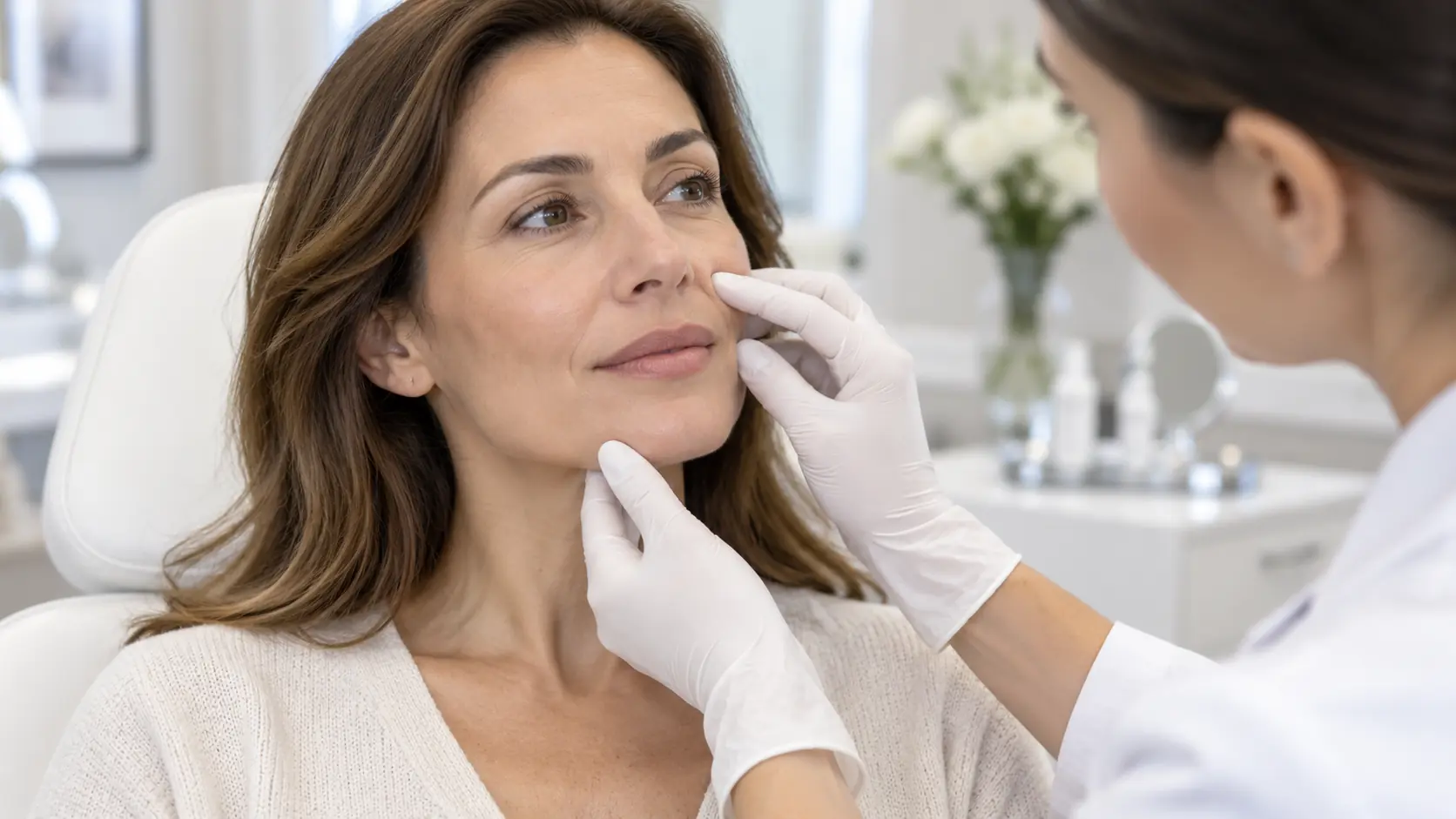
How to choose a clinic or practitioner: criteria to get it right
Hygiene, protocol, materials and traceability
Make sure that:
- they use sterile single-use cartridges,
- there is a genuine disinfection protocol,
- they explain the depth, number of passes and the plan,
- they record what is done (traceability),
- and they give you aftercare instructions in writing or very clearly.
Key questions to ask before booking
- “What depth will you use and why?”
- “How many sessions do you recommend for my case?”
- “What risks are there for my skin type?”
- “What can and can’t I apply afterwards?”
- “What happens if I have a breakout or get irritated?”
If they answer in a hurry or vaguely… that is a bad sign.
Frequently asked questions about microneedling
Does it hurt?
It is uncomfortable, yes, but usually tolerable. In clinic, topical anaesthetic can be used depending on the protocol and area. It should not be torture.
Can it be done in summer?
It can, but with impeccable sun protection and avoiding direct sun. If you know you will be out in the sun, it is better to plan it for another time of year or adjust the protocol.
How often should it be repeated?
It depends on the goal. Many schedules leave 3 to 6 weeks between sessions. We decide based on your skin and how it progresses.
Does it work for scars and stretch marks?
For scars (especially post-acne), yes, it can help a great deal in selected cases and with consistency. For stretch marks, it can also improve texture and appearance, but they usually require more sessions and sometimes a combination with other techniques.
Conclusion: who it is ideal for and how to get off to a good start
Microneedling is ideal if you want a real improvement in texture, pores, radiance and marks without resorting to overly aggressive treatments. It is not instant magic, but it is one of those procedures that, when properly planned, keeps adding up until one day you look in the mirror and say: “you know what, my skin looks better”.
Our final advice, as one friend to another: do not improvise. The difference between “beautiful skin” and “irritated skin with a dark mark” usually lies in the details: depth, hygiene, protocol, actives and aftercare.
If you want to do it properly from the start, the ideal is to assess your case and design a plan that suits your skin, your lifestyle and your goals. Because yes, microneedling is worth it… but above all when it is done sensibly.
[googlesitekit-end-of-content]