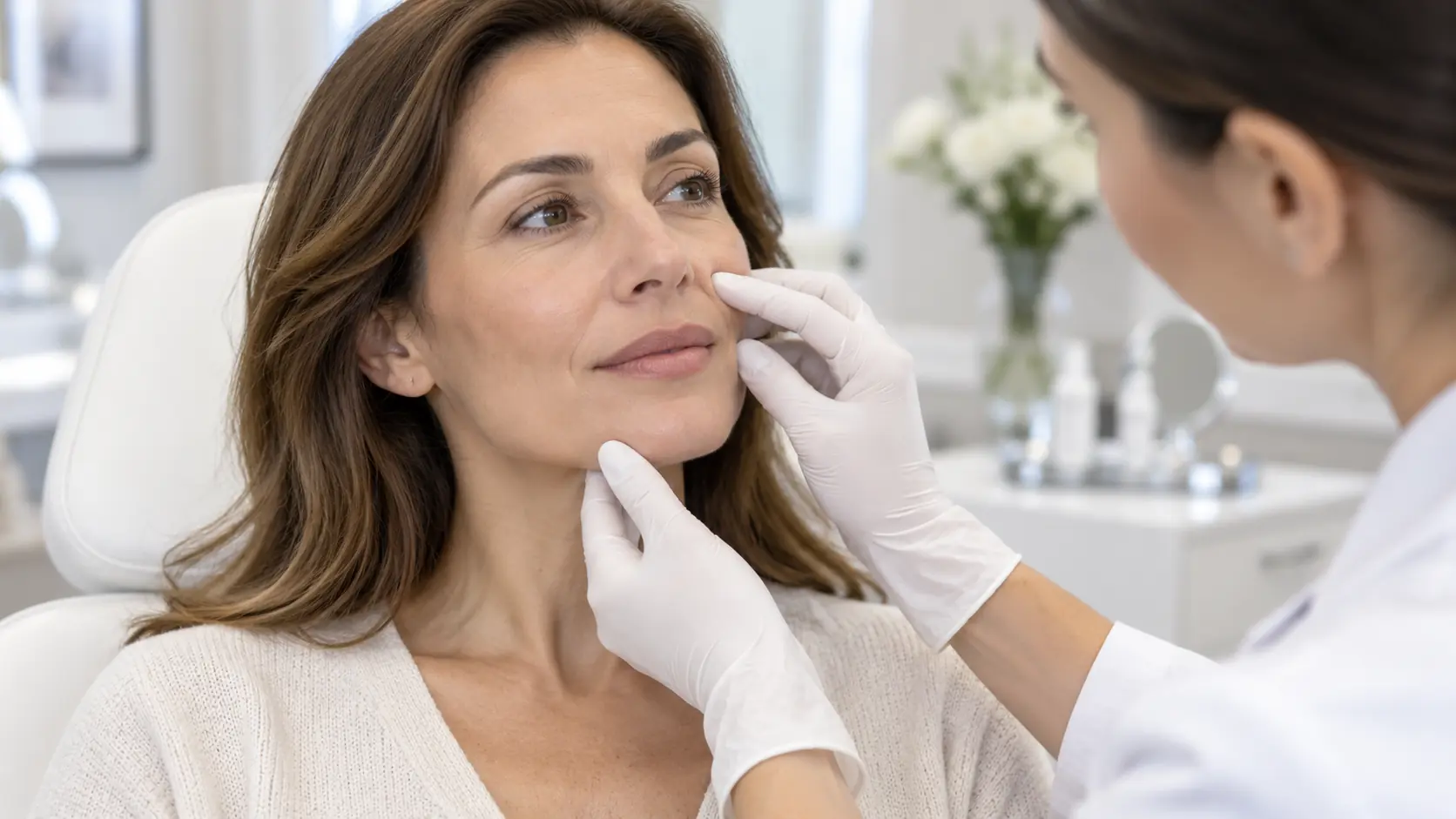
Photodynamic therapy: what it is, its benefits and what you should know before having it
Dr Eva Garrigós · 19 September 2025
The skin is our shield against the outside world, but it also builds up damage, lesions and small marks from the passage of time or sun exposure. Among the most innovative medical treatments of recent years, photodynamic therapy has become a safe, effective and increasingly sought-after option. In this article we explain in detail what it involves, when it is recommended and what you can expect if you decide to have it.
What does this medical treatment involve?
Photodynamic therapy, also known as PDT, is a technique that combines photosensitising drugs with a special light source to selectively destroy abnormal cells. It sounds complex, but the principle is actually quite simple: we apply a substance that makes certain cells more sensitive to light and then illuminate them with a medical lamp that triggers the reaction.
How it works and how it acts on the cells
The photosensitising medication is applied to the skin, usually as a cream or gel. This compound accumulates preferentially in damaged, precancerous or abnormal cells.
When exposed to light of a specific wavelength, it is activated and generates oxygen free radicals that destroy those diseased cells without unduly affecting healthy tissue.
In other words, it is like shining a selective spotlight on what we want to eliminate, while preserving as much as possible of what we want to keep.
Differences from other dermatological procedures
You might think it is a treatment similar to laser or a chemical peel, but it is not the same.
- Laser destroys tissue directly through heat.
- A peel uses chemical substances that exfoliate or resurface the skin.
- Photodynamic therapy is based on a very specific biochemical mechanism that is far more targeted, less aggressive overall and, in most cases, has a shorter recovery time.
Most common indications: when it is recommended
PDT is not a superficial cosmetic treatment, although it does also improve the appearance of the skin. Its main medical indication is in clinical dermatology, specifically for precancerous lesions and certain skin conditions.
Precancerous skin lesions
One of its most important uses is removing actinic keratosis, rough patches that appear on skin heavily exposed to the sun (face, scalp, backs of the hands). These lesions carry a risk of developing into squamous cell carcinoma, so removing them in time is essential.
Common dermatological conditions treated with this technique
As well as actinic keratosis, photodynamic therapy may be recommended for:
- Superficial basal cell carcinomas.
- Some forms of severe inflammatory acne.
- Skin rejuvenation in photoaged skin.
In short, it is indicated when we want to treat very specific cellular changes without the need for invasive surgery.
Is photodynamic therapy painful?
This is one of the most frequent questions in consultation. The short answer: it depends. It is not 100% painless, but it cannot be compared with surgery either.
What the patient may feel during the session
It is normal to feel stinging, heat or intense itching while the light is working. These sensations usually last only as long as the illumination (a few minutes). Afterwards, the discomfort subsides and is easily managed with soothing creams or local cooling.
Factors that influence how pain is perceived
- The area treated: the forehead is not the same as the back.
- The extent of the lesions.
- Each person's pain threshold.
In any case, the discomfort is temporary and very bearable compared with the medium- and long-term benefits.
Possible side effects and risks
Like any medical procedure, it is not free of reactions. The key is knowing which are normal and which need attention.
Skin reactions in the first few days
It is common to notice:
- Redness.
- Mild swelling.
- Superficial crusting.
These effects last a few days and are part of the therapeutic response.
When to consult the specialist
You should see your dermatologist if you notice:
- Very intense pain that does not improve with ordinary painkillers.
- Discharge or signs of infection.
- A reaction far more extensive than expected.
Although it is uncommon, it is important to be clear about this before starting treatment.
Aftercare following photodynamic therapy: a practical guide
Aftercare is just as important as the session itself. This is where you play a key role.
Immediate advice after the session
- Avoid direct sun exposure for at least 48 hours.
- Wear a cap, hat or physical protection if you need to go out.
- Apply the regenerating creams recommended by the specialist.
Tips for proper healing and skin protection
Over the following days:
- Keep the skin hydrated with neutral products.
- Do not pick off the crusts.
- Apply broad-spectrum sunscreen every day.
If you follow these guidelines, recovery will be much faster and your skin will be left in better condition.
Results: what to expect in the short and long term
The most striking thing is the visible improvement in the skin within a few weeks. Precancerous lesions disappear, skin tone evens out and the overall appearance is healthier.
In the long term, as well as improving appearance, we are reducing the risk of developing skin cancer, which makes photodynamic therapy an investment in health, not just in beauty.
Frequently asked questions about this procedure
How many sessions do I need?
It depends on the type and extent of the lesion. In many cases one is enough, although several are sometimes recommended.
Can I lead a normal life afterwards?
Yes, but avoiding sun and intense heat for the first few days.
Is it compatible with other treatments?
Usually yes, but this should always be assessed by your dermatologist.
In conclusion, photodynamic therapy is an innovative, safe and effective technique for both preventing and treating skin lesions. Not only does it care for your skin from a medical point of view, it also visibly improves its appearance.
If you are considering this treatment and would like a personalised diagnosis, we invite you to take the step and put yourself in the hands of specialists. You can book an appointment at our aesthetic medicine clinic in Alicante and we will answer all your questions.
[googlesitekit-end-of-content]