The differences between red and white stretch marks: how to identify them and which treatments can improve them
Dr Eva Garrigós · 10 August 2026
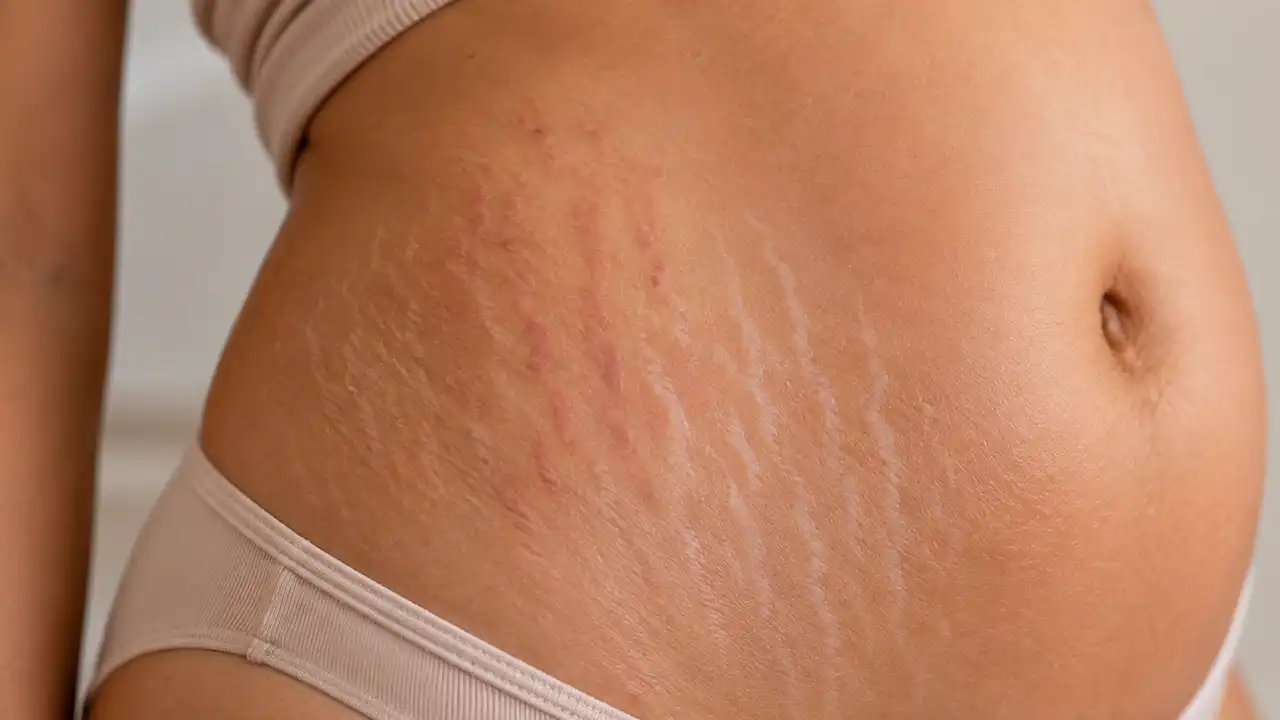
The differences between red and white stretch marks are mainly due to the stage of development the lesion has reached. Although at first glance they may look like two different types of mark, they are usually two phases of the same process.
Red, pink or purplish stretch marks are generally more recent. They still have a certain inflammatory and vascular component, so they may respond better when treated early. White ones, on the other hand, have been on the skin for longer: they have lost much of their blood supply, have a pearly tone and tend to behave like a small atrophic scar.
This does not mean that white stretch marks cannot be improved. Their texture, depth, width and contrast can indeed be softened, but they usually require procedures aimed at stimulating deep collagen remodelling.
The quick answer would be this:
- Red stretch mark: recent, vascularised and more responsive.
- White stretch mark: mature, atrophic and more resistant to treatment.
- At no stage is it realistic to guarantee complete removal.
Let us look at what really happens in the skin and which options can help us in each case.
Why stretch marks appear and how the skin changes
Stretch marks, also known as striae distensae, appear when the skin cannot adapt properly to a change in volume or to sustained tension. It is not simply a case of “the skin tearing” because of weight gain. The process is far more complex and involves mechanical, hormonal and genetic factors.
At first a red, pink or purplish band forms. Over time, that mark usually loses colour until it takes on a whitish, pearly or slightly silvery appearance.
What happens to the collagen and elastin fibres
The dermis is the layer of the skin that provides support, strength and elasticity. Within it is a network of collagen and elastin fibres organised to withstand movement, stretching and changes in volume.
When a stretch mark forms, changes occur in that dermal matrix. The fibres may become thinner, disorganised and less able to maintain the skin’s usual structure. Changes have also been observed in the activity of fibroblasts, the cells responsible for producing collagen, elastin and other supporting components.
Molecular and histological studies show differences between skin with stretch marks and healthy skin, as well as between recent and mature lesions. That is why treatment does not simply consist of hydrating the surface: the aim must be to stimulate controlled repair of the dermis. Factors that favour their appearance: weight changes, pregnancy, growth and genetics
Stretch marks are usually linked to periods when the body changes rapidly. Some of the most common situations are:
- Rapid growth during puberty.
- Pregnancy, especially because of abdominal distension and hormonal changes.
- Significant weight gain or loss.
- Rapid increase in muscle mass.
- Family predisposition.
- Certain hormonal disorders.
- Prolonged or inappropriate use of corticosteroids.
In pregnancy, for example, various studies have linked their appearance to factors such as maternal age, weight gain, abdominal size, the baby’s weight and family history. However, there is no exact formula for predicting who will get them. Two people can go through similar bodily changes and develop very different marks. Genetics has a good deal to say here. Some skin tolerates stretching better, while other skin has less structural resistance. That is why there is no point in blaming yourself or thinking they appeared simply because you did not use enough cream.
The areas of the body where they most often appear
The most common locations depend on the stage of life and the type of bodily change. They are often found on the:
- Abdomen.
- Hips and flanks.
- Buttocks.
- Thighs.
- Breasts.
- Arms.
- Lower back.
- Knees and calves, less frequently.
During adolescence they can appear on the lower back, thighs, buttocks or knees, even without being overweight. In fact, growth-related stretch marks can also affect healthy, slim teenagers. Red stretch marks: the features of a recent lesion
Red stretch marks are medically known as striae rubrae. They generally represent an early stage, although their exact shade can vary depending on skin phototype.
In some people they are clearly red. In others they look pink, deep red, purplish or even brown. That is why the colour must always be interpreted in the light of the skin’s natural tone.
How to recognise them by their colour, texture and sensitivity
A recent stretch mark usually shows several of these features:
- Red, pink, violet or reddish-brown colour.
- A slightly smooth or shiny surface.
- A different texture from the surrounding skin.
- Indentation that is still only slight.
- Possible itching, tightness or tenderness.
- Relatively well-defined edges.
Itching does not always occur, but it is relatively common during periods of growth, pregnancy or rapid changes in volume. Sometimes people notice the tightness before they notice the change in colour.
It is important not to confuse a purplish stretch mark with a bruise. If the marks appear without a clear cause, are particularly wide, are accompanied by other symptoms or appear while using corticosteroids, a medical assessment is advisable.
Why they may respond better to early treatment
Reddish lesions have a greater blood supply and are in a biologically more active phase. This makes it possible to use technologies aimed both at the vascular component and at dermal stimulation.
In studies comparing vascular laser and intense pulsed light treatments, red stretch marks have shown a better response than white ones in certain parameters. That does not mean they disappear after one session, mind you, but rather that there is a more favourable therapeutic window. For this reason, we recommend not necessarily waiting for them to turn white before seeking advice. The sooner we assess the lesion, the more options we will have to act on its colour and on tissue remodelling.
How long they take to fade
There is no fixed timescale. Some marks begin to lose intensity within a few months, while others keep a reddish or purplish tone for longer.
How they develop depends on factors such as:
- Depth and width.
- The area affected.
- Phototype.
- Ongoing bodily changes.
- Individual predisposition.
- Sun exposure.
- Use of certain medications.
Over time, many red stretch marks fade to a lighter shade. However, fading is not the same as disappearing. Even if the colour diminishes, an indented line or a different texture may remain.
White stretch marks: what they indicate and why they are harder to treat
White stretch marks, or striae albae, correspond to a more mature stage. The inflammatory colour has diminished, the vessels are less visible and the tissue has become more atrophic.
They are usually lighter than the surrounding skin and can become particularly noticeable in summer, when healthy skin tans and the mark barely changes its pigmentation.
How the tissue changes when the mark turns pearly
When a stretch mark turns white, the dermis has already completed much of its reorganisation. The skin may be left thinner and indented, with an abnormal arrangement of the supporting fibres.
At this stage it is no longer enough to try to reduce redness. Treatment should aim to:
- Stimulate new collagen.
- Encourage reorganisation of the dermis.
- Increase skin thickness and quality.
- Soften the edges.
- Reduce the contrast in texture.
That is why fractional technologies are often used. These create microscopic columns of controlled injury, leaving healthy skin between them to aid recovery.
The differences between a recent scar and a mature stretch mark
A conventional scar usually forms after a wound, an operation, a burn or an injury that breaks the surface of the skin. A stretch mark, by contrast, develops from within the dermis and normally leaves the epidermis intact.
Even so, a white stretch mark shares some features with atrophic scars: reduced thickness, altered collagen and surface indentation. That similarity explains why certain procedures used in scar remodelling can also be used to improve stretch marks.
Why creams offer limited results at this stage
A moisturising cream can improve softness, reduce dryness and give a more comfortable appearance. What it cannot do on its own is rebuild an established atrophic dermis.
Some renewing actives have shown modest improvements in certain studies, but topical treatments give variable and generally limited results on white stretch marks. In addition, substances such as retinoids can cause irritation and require specific precautions, especially during pregnancy. That is not to say that skincare is useless. It works as a support, but we should not attribute to it a capacity for deep repair that it does not have.
A quick comparison of the two types of stretch marks
Colour, age, vascularisation and depth
The main differences can be summarised as follows:
| Feature | Red stretch marks | White stretch marks |
|---|---|---|
| Stage | Early or recent | Mature or established |
| Colour | Red, pink, violet or brown | White, pearly or silvery |
| Vascularisation | Greater | Lesser |
| Inflammation | May be present | Generally minimal |
| Texture | Less atrophic at first | Thinner and more indented |
| Usual response | More favourable if treated early | Slower and more variable |
| Main goal | Reduce colour and prevent consolidation | Remodel collagen and texture |
This table is a helpful guide, but it is no substitute for an examination. Some stretch marks are at an intermediate stage and show both red and white areas within the same lesion.
Capacity for regeneration and expected response to treatment
Red stretch marks usually offer more possibilities because they still have vascular activity. White ones need a new repair process to be triggered through mechanical, thermal or light-based stimuli.
In both cases we should talk about improving, not erasing. A satisfactory response may mean that the mark looks narrower, less indented, more even or much less noticeable from a certain distance.
And yes, a partial improvement can considerably change how the area looks overall.
Why the age of a stretch mark affects the result
The age of the lesion is not the only important factor, but it is one of the main ones. A reddish line that appeared a few weeks ago does not respond in the same way as a pearly mark that has been there for ten years.
The importance of acting during the inflammatory phase
In the early phase we can work on the vascular colour and stimulate repair before the atrophy becomes fully established.
Depending on the assessment, light-based procedures, microneedling or gradual combinations may be considered. Early treatment also allows us to see whether new lesions keep appearing and to analyse what is causing them.
What happens when the mark is already established
Once the stretch mark is white, the priority becomes texture. We need to stimulate the fibroblasts and bring about gradual dermal renewal.
The process is not immediate. The body needs weeks and months to produce and reorganise collagen. That is why we do not judge the final result a few days after a session.
Other influencing factors: width, depth, area and skin quality
Two white stretch marks of the same age may respond differently. Influencing factors include:
- The width of the mark.
- The degree of indentation.
- The number of lesions.
- Skin thickness.
- The body area.
- Phototype.
- Healing capacity.
- Sun exposure.
- Smoking.
- Weight stability.
- Previous treatments.
Fine, superficial marks usually respond better than very wide, deep stretch marks. Even so, the individual response can only be estimated after assessing the skin directly.
Treatments to improve red stretch marks
The plan for a recent stretch mark should be tailored to its colour, the phototype and the sensitivity of the area. Sometimes we treat the vascular component first and add remodelling techniques later.
Intense pulsed light and technologies targeting the vascular component
Intense pulsed light can act on certain chromophores in the skin, including the vascular component that contributes to the reddish colour.
Its suitability depends on the phototype, the degree of tanning and the wavelength used. Not all intense pulsed light devices are the same, and not all settings are suitable for every skin.
Clinical studies have observed improvements in colour and in some texture parameters, with a generally more favourable response in red lesions. Risks of pigmentation changes have also been described, especially when the treatment is not properly adapted to the phototype. Microneedling to stimulate skin regeneration
Microneedling creates controlled microchannels using very fine needles. The aim is not to “break up” the stretch mark, but to trigger a repair response that stimulates the production and reorganisation of collagen.
It can be used at different stages, adjusting the depth and number of passes according to the area. Afterwards it is common to notice redness, tenderness and slight swelling for a short period.
In a clinical study involving different phototypes, improvements were seen after a series of sessions, although the percentages published in small studies should not be read as an individual promise. Biostimulation and regenerating actives depending on each case
Some strategies combine mechanical stimulation with substances intended to support repair or improve skin quality.
The choice depends on the stage of the stretch mark, the skin’s tolerance and the evidence available for each product. Not all so-called “regenerating cocktails” are equivalent, and we should not apply injectable or topical actives simply because they are fashionable.
In our clinic we assess what the tissue really needs and whether the combination offers a reasonable advantage over a single technique.
Treatments to improve white stretch marks
With mature marks we aim to induce more intensive remodelling. To do so we can use fractional devices capable of acting at different levels of the dermis.
Fractional laser and controlled skin renewal
Fractional laser creates small treatment zones separated by intact tissue. This allows deep renewal to be stimulated without treating the entire surface uniformly.
Fractional CO₂ laser is one of the technologies studied for white stretch marks. It can help improve surface relief and encourage new collagen formation, although it usually causes a few days of redness, swelling, peeling or small scabs.
Clinical trials have observed improvements in mature lesions, but they also confirm that the result is partial and that extreme caution is needed in skin prone to hyperpigmentation. Non-ablative fractional lasers can also be used. Recovery is usually more comfortable, although the protocol and intensity required vary. Some studies have observed an increase in dermal thickness and in collagen and elastin deposition after treatment. Fractional microneedle radiofrequency
Fractional microneedle radiofrequency inserts needles to a selected depth and releases thermal energy within the dermis.
This combination makes it possible to act on deep tissue while limiting some of the surface impact. It can be particularly worthwhile for certain phototypes or when we want to improve texture and associated laxity.
Studies have described increased skin thickness and changes in collagen and elastin density, although the intensity of the result remains variable. Combining techniques to stimulate collagen and smooth texture
When the marks are numerous, wide or deep, a single tool may fall short. In those cases we may propose protocols combining:
- Fractional laser.
- Microneedle radiofrequency.
- Microneedling.
- Biostimulation.
- Medical skincare at home.
- Strict sun protection.
Combining does not mean doing everything at once. It is often better to alternate techniques, observe the response and adjust the next session. Some studies have found a slightly greater improvement with combined protocols, but the selection must remain individual. You can find out more about our stretch mark treatment and the options we consider depending on the type of mark and the characteristics of your skin.
Can stretch marks be removed completely?
This is probably the most important question. The honest answer is that we cannot guarantee the complete removal of a stretch mark.
We can make it less visible, make the texture more even and reduce the contrast. In some cases the improvement is very noticeable; in others, more subtle.
There is currently no single treatment considered perfect or universal for all stretch marks. Which results are realistic depending on colour and age
With a red stretch mark we can expect a gradual reduction in vascular intensity and better blending with the surrounding skin.
With a white stretch mark we usually aim for:
- Less indentation.
- Softer edges.
- More even texture.
- A reduction in apparent width.
- Less contrast with the surrounding skin.
The result depends both on the procedure and on each person’s biological response. Clinical photographs should be taken with the same lighting, distance and position so that real changes, rather than mere differences in light, can be assessed.
How many sessions may be needed
There is no number that applies to everyone. Many protocols involve several sessions a few weeks apart, but the exact number depends on:
- The technique selected.
- The depth of the lesion.
- The size of the area.
- Recovery capacity.
- The person’s goal.
- The response after each session.
As a guide, some plans may include between three and six sessions, although some cases need fewer and others require maintenance or subsequent combinations.
When changes start to become visible
Redness may diminish before texture improves. When we are aiming to remodel collagen, the result is slower.
The first changes may start to become noticeable in the following weeks, but the skin continues to reorganise for several months. Assessing too early can lead us to think it has not worked when the biological process is still under way.
How to choose the most suitable treatment for each skin
We do not recommend choosing a technology simply because it has appeared on social media or because it worked well for someone else.
The same machine, with the same settings, may be suitable for one skin and too aggressive for another.
The importance of a personalised medical assessment
During the assessment we analyse:
- Whether the stretch mark is red, white or mixed.
- Its approximate age.
- The phototype.
- Whether there is a tan.
- Skin thickness.
- The area and extent.
- Any tendency to hyperpigmentation.
- Healing history.
- Regular medication.
- Pregnancy or breastfeeding.
- Expectations.
We also need to check that they really are physiological stretch marks. When they appear very suddenly, are abnormally large or are accompanied by hormonal signs, it may be necessary to investigate the cause before carrying out an aesthetic procedure.
Cases in which it is advisable to combine several technologies
A combination can be useful when colour, indentation and loss of firmness coexist. For example, a stretch mark that is partly reddish and partly white may need a sequential approach.
We may also combine when a first technique has improved the tone, but some irregularity in texture remains. We do this step by step, because more intensity does not always mean a better result.
Contraindications and precautions before starting
The specific precautions depend on the device, but we pay particular attention to:
- Pregnancy and breastfeeding.
- Active infections.
- Wounds or dermatitis in the area.
- Active cold sores.
- A recent tan.
- Photosensitising medication.
- Clotting disorders.
- A tendency to hypertrophic or keloid scarring.
- Poorly controlled illnesses.
- Recent procedures in the same area.
It is also essential to follow the aftercare instructions. Picking at scabs, sun exposure or applying irritating products too soon can increase the risk of pigmentation marks and prolong inflammation.
Home care to complement treatment
A home routine is no substitute for the medical procedure, but it can help keep the skin more comfortable and protected during the process.
Hydration, sun protection and skincare with renewing actives
Proper hydration helps maintain the skin barrier and reduces the feeling of tightness. We can use formulas with ceramides, glycerin, hyaluronic acid, urea at suitable concentrations or soothing ingredients.
Sun protection is especially important when the area is exposed. Ultraviolet radiation can encourage pigmentation changes after laser, intense pulsed light or microneedle treatments.
Renewing actives should be recommended on a case-by-case basis. Retinoids, for example, are not suitable during pregnancy and can cause irritation. It is never a good idea to start several potent products just before or after a procedure without checking first.
Habits that help maintain skin elasticity
No habit can guarantee that stretch marks will never appear, but we can look after the overall health of the skin:
- Avoid sudden weight changes where possible.
- Eat a sufficient and varied diet.
- Get enough protein.
- Do not smoke.
- Drink water according to your personal needs.
- Build up exercise gradually.
- Avoid using corticosteroids without medical advice.
- Keep the skin hydrated.
During strength training, gaining muscle mass gradually allows the tissues to adapt better. Even so, a strong genetic predisposition can cause stretch marks to appear even with good habits.
Which products cannot repair a stretch mark on their own
Be wary of cosmetics that promise to “erase stretch marks in seven days” or to rebuild collagen completely from the surface.
A cream cannot replicate the effect of a fractional laser, microneedle radiofrequency or a medical remodelling treatment. It can hydrate, improve the surface appearance and complement the protocol, but it cannot work magic.
Advertising sometimes gets a little carried away on this subject.
Frequently asked questions about stretch marks
Do red stretch marks always end up turning white?
Many reddish stretch marks gradually lose their blood supply and turn white or pearly. However, the speed of the change varies and some keep a pink, violet or brown tone for quite a long time.
Treating them early can reduce their visibility, but it does not guarantee they will disappear or necessarily stop them from evolving.
Is it better to treat them before or after the summer?
It depends on the technique and your habits. Some treatments can be carried out at different times of the year as long as there is no tan and strict sun protection can be maintained.
Even so, the months with less sun exposure are usually more convenient for fractional or light-based procedures, especially when the area is uncovered. If you plan to sunbathe, go to the beach or spend a lot of time outdoors, we need to plan the schedule carefully.
Does a tan hide the marks or make them more visible?
White stretch marks usually tan less than healthy skin, so they can become more visible when the surrounding skin darkens.
Red marks may change in contrast, but the sun does not treat them. In addition, intense exposure can encourage colour changes and make energy-based procedures more difficult to carry out.
Self-tanner may temporarily reduce the visual contrast in some cases, although it should be avoided around sessions and removed following the practitioner’s instructions.
Can they come back after treatment?
A treated stretch mark does not usually “reappear” as if it had been removed completely, because part of the mark normally remains. What can happen is that new lesions appear if weight changes, pregnancy, growth, muscle gain or hormonal changes occur again.
Treatment improves the existing marks, but it does not completely change your skin’s predisposition.
Professional assessment to improve the appearance of stretch marks
Being able to tell a reddish lesion from a white one helps us set more realistic goals. Red stretch marks usually respond better when we act during their active phase, whereas white ones require deeper remodelling and usually several sessions.
At Dr Eva Garrigós Clinic we assess the colour, age, depth, phototype and overall quality of the skin before recommending a treatment. We do not use the same protocol for everyone, because two apparently identical marks may need different approaches.
Our goal is not to promise impossible skin or to make you feel you must hide your stretch marks. They are extremely common and, in most cases, are not a medical problem. But if they bother you and you would like to improve them, there are procedures that can gradually reduce their visibility.
A personalised assessment will allow us to explain what result is reasonable in your case, which technique can offer the most benefit and what care your skin will need before and after each session.
[googlesitekit-end-of-content]