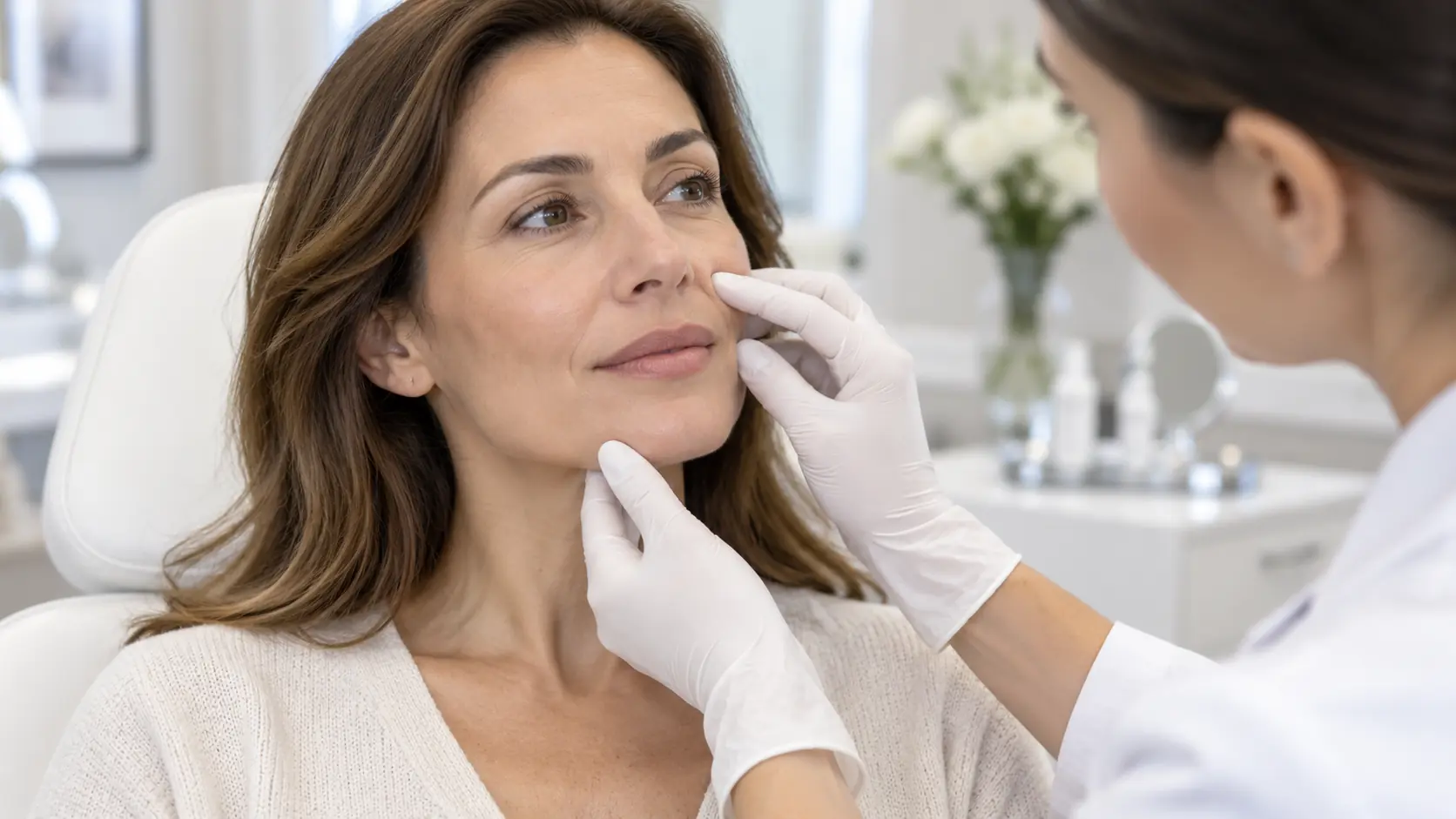
What is HIFU facial and why is it revolutionising anti-ageing treatment?
Dr Eva Garrigós · 6 November 2025

We are hearing more and more about HIFU facial, a treatment that promises to tighten, rejuvenate and redefine the face without surgery or needles. But… what is really behind this technique? Does it actually work, or is it just a passing trend?
In this article we explain what HIFU facial is, how it works on the deepest layers of the skin, its benefits, risks and costs, and everything you need to know before deciding on it.
An introduction to focused ultrasound for the face
What does this non-surgical technique involve?
HIFU, or high-intensity focused ultrasound, is a non-invasive aesthetic procedure that uses ultrasound energy to stimulate collagen production in the deep layers of the skin. In other words, it works from the inside out, creating a natural, progressive lifting effect.
Unlike other superficial treatments, HIFU does not damage the epidermis, as it directs the energy precisely where the skin needs to regenerate. The result is a firmer, more defined face with better texture, without having to go under the knife.
Why are more and more people choosing this skin-tightening method?
The success of HIFU facial lies in the fact that it combines effectiveness, safety and convenience. It is ideal for those looking for visible rejuvenation but with no recovery time. After a session you can return to your usual routine (work, sport, even make-up) without any problem.
What's more, the results improve as the weeks go by, making it a very attractive alternative to surgical treatments or temporary fillers.
How the treatment works: the mechanism and the skin layers involved
The role of the SMAS layer and how ultrasound works in depth
HIFU is not limited to the surface. Its real magic lies in the SMAS layer (Superficial Musculoaponeurotic System), the same layer that surgeons tighten in a surgical facelift.
Focused ultrasound reaches this layer through precise points of heat, producing an immediate contraction of the tissue followed by a reorganisation of the collagen.
Collagen production and a progressive tightening effect
The thermal stimulus of HIFU triggers a natural repair response: the body starts to produce new collagen and elastin.
This process takes a little time (between 4 and 8 weeks), but the results become increasingly visible and can last up to a year. It is as if the skin "remembered" its original structure and reactivated itself.
Benefits and expected results of a HIFU procedure for the face
Main advantages over traditional treatments
The benefits of HIFU facial are wide-ranging:
- A visible lifting effect without surgery.
- No needles or general anaesthetic required.
- Natural results, with no drastic changes in expression.
- Zero recovery time.
- Stimulates rejuvenation from within.
And best of all, it can be performed at any time of year, even in summer, as it does not cause photosensitivity like some laser treatments or peels.
When do the effects start to show and how long do they last?
Some patients notice a slight immediate improvement thanks to the initial contraction of the tissue. However, the real change is seen from the first month, reaching its peak at three months.
How long the results last depends on each person's skin, but they usually hold for between 12 and 18 months, at which point a maintenance session is recommended.
Who is it suitable for?
Skin types, recommended ages and common goals
HIFU facial is ideal if you are between 30 and 60 and are beginning to notice mild or moderate laxity, loss of firmness or sagging. It suits all skin types and phototypes, as it does not interfere with pigmentation.
Areas of the face that can benefit from the treatment
The most commonly treated areas are:
- Jaw and jawline.
- Double chin and neck.
- Cheeks and cheekbones.
- Forehead and eye area.
- Décolletage.
In every case, the aim is to define, tighten and rejuvenate harmoniously.
Risks, contraindications and points to bear in mind
Possible mild side effects and how often they occur
HIFU is a very safe treatment, but it can cause slight redness, tingling or tenderness in the treated area. These are mild, temporary effects that disappear within a few hours.
Situations in which it should be avoided or postponed
HIFU facial is not recommended in cases of:
- Pregnancy or breastfeeding.
- Active infections or wounds in the area.
- Metal implants or pacemakers.
- Serious skin disorders.
That is why a prior medical assessment is essential before starting any treatment.
Comparison with other aesthetic solutions: laser, radiofrequency, traditional facelift
Key differences in invasiveness, recovery and cost
HIFU differs from laser and radiofrequency in its depth of action.
Whereas laser acts on the epidermis and radiofrequency on the dermis, HIFU reaches the SMAS without injuring the superficial layers.
In terms of cost, it is more affordable than a surgical facelift, although somewhat more expensive than advanced radiofrequency.
When might a surgical facelift be more suitable than a non-invasive treatment?
When laxity is severe or there is obvious excess skin, a surgical facelift may be more appropriate. HIFU does not replace surgery, but in many cases it does delay the need for it, helping to maintain a youthful appearance for longer.
How to prepare for a session and what to expect during the procedure
Advice beforehand
Before the session, it is advisable to arrive with clean skin, free of make-up and creams. It is also recommended to avoid using exfoliating acids or retinoids in the preceding days.
What happens during the treatment
The procedure usually takes between 30 and 90 minutes, depending on the areas to be treated.
A conductive gel is applied and the device emits controlled ultrasound pulses. You may feel a slight sensation of warmth or internal prickling, but it is perfectly tolerable.
Afterwards, the skin may be a little red, but no recovery is needed.
Maintaining the effect: session frequency and aftercare
Typical plans
The usual approach is one session a year, although in some cases two or three initial sessions a few months apart are recommended to enhance the results.
Complementary habits that support the results
- Keep up good daily hydration.
- Use broad-spectrum sun protection.
- Avoid smoking and excess alcohol.
- Follow a diet rich in antioxidants.
These habits not only prolong the effects of HIFU but also improve the overall quality of the skin.
Approximate cost in Spain and the factors that affect it
Factors that can make the price vary
The price of HIFU facial varies from case to case and we will tell you at your assessment, depending on:
- The area treated (full face, neck, double chin…).
- The clinic and the practitioner's experience.
- The number of sessions recommended.
How to judge value for money
Don't be guided by price alone. Always ask which device is used, what certifications it has and who performs the treatment. In aesthetic medicine, safety and the practitioner's experience are the best investment.
Frequently asked questions about HIFU facial
Does it hurt much? Is anaesthesia needed?
It is not a painful treatment, although you may feel slight, momentary discomfort in certain areas. It requires no anaesthesia, just a conductive gel.
When can I return to my usual routine?
Immediately. There is no recovery time, so you can go back to work or the gym the same day.
Is it suitable for all skin types? And for older people?
Yes, HIFU is suitable for all skin types. In older people it can deliver visible improvements, although in cases of advanced laxity it may need to be combined with other treatments.
Conclusion: is this type of treatment worth investing in?
Summary of the pros and cons
HIFU facial offers natural, long-lasting results without surgery, provided it is performed with quality equipment and by expert hands. It is not a miracle, but it is an excellent tool for preventing and improving the signs of ageing.
Among its advantages:
- Non-invasive.
- A genuine tightening effect.
- No downtime and no scars.
Among its limitations:
- It does not replace surgery for severe laxity.
- The results are progressive, not immediate.
Final tips for choosing a trusted clinic and practitioner
If you are thinking of trying this treatment, make sure you go to an authorised medical centre with professionals specialising in facial aesthetic medicine.
At Dr Eva Garrigós's clinic, we will give you a personalised diagnosis and explain which protocol best suits your skin and your goals.
Because caring for your skin shouldn't be a trend, but a conscious, well-informed decision.
[googlesitekit-end-of-content]