Wood therapy: what it is, its real benefits and when it is worth it
Dr Eva Garrigós · 11 May 2026
Wood therapy has become one of the most sought-after body treatments for people who want to improve the appearance of their skin, feel less bloated and work on specific areas such as the legs, buttocks, abdomen or arms. But, as with many aesthetic treatments, this technique raises plenty of questions: what wood therapy is, whether it really works, whether it helps you lose weight, how many sessions you need or what happens when it is done badly.
At Dr Eva Garrigós Clinic we like to explain things clearly. Wood therapy can be a very worthwhile technique when it is applied well, with professional judgement and as part of a personalised body plan. That said, it is not magic, it does not replace a balanced diet and it does not remove localised fat on its own. Its value lies in the massage, the drainage, the stimulation of the tissue and the visible improvement in the skin when you are consistent with it.
If you are thinking about having a wood therapy treatment, here is everything you need to know before you start.
What wood therapy is and how this body massage works
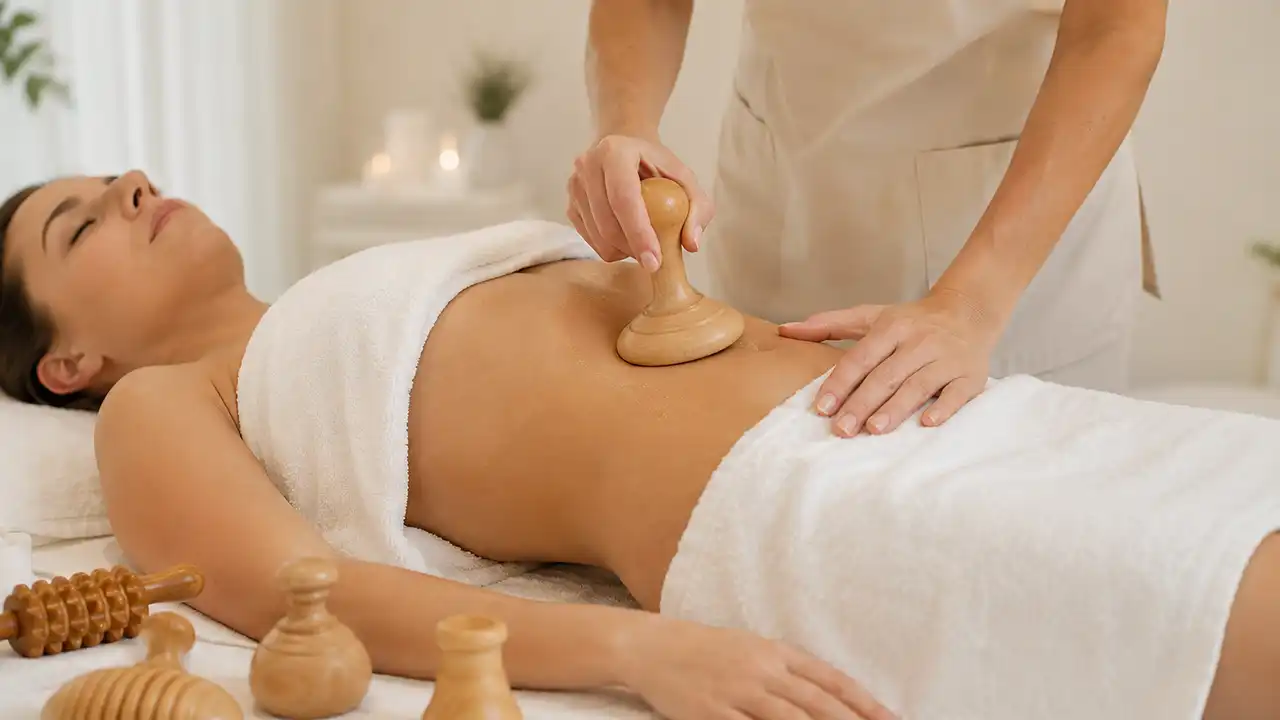
Wood therapy is a manual massage technique that uses various wooden instruments designed to fit the curves of the body. These tools (rollers, cups, sculpting boards or textured implements) make it possible to work the skin and subcutaneous tissue with rhythmic movements, controlled pressure and specific manoeuvres.
Put simply: wood therapy combines body massage, circulatory stimulation and drainage. It is not just a matter of “running rollers over the skin”, although social media sometimes oversimplifies it. A well-performed session requires knowledge of anatomy, an assessment of the skin, adapting the pressure and knowing when an area needs more drainage, less intensity or should not be treated at all.
A wood massage aims to mobilise retained fluid, activate surface circulation, ease the feeling of heaviness and encourage a more even-looking skin. In some cases it is also used as support within body protocols for cellulite, body contouring or mild laxity.
There is an important point here: the technique does not “break down fat” or make you lose weight by itself. What it can do is help you look and feel better when there is swelling, fluid retention, cellulite or a lack of skin tone. And that, properly explained, is already quite a lot.
What wood therapy is for: drainage, cellulite and body contouring
When someone asks us what wood therapy is for, we usually answer that its main uses fall into three areas: drainage, a visible improvement in cellulite and light body contouring.
On the one hand, the massage helps stimulate circulation and the lymphatic system, which can encourage the elimination of retained fluid. This is especially noticeable in people who have heavy legs, swollen ankles or a bloated abdomen. It is not unusual for someone to say after a session: “I feel lighter”. That feeling is usually linked to drainage.
On the other hand, wood therapy is widely used in cellulite treatments. Cellulite, or orange-peel skin, does not depend on fat alone. Circulation, fluid retention, the structure of the connective tissue, hormonal changes and skin quality all play a part. That is why a well-applied massage can help improve the appearance of the area, even though it will not eliminate it completely.
And finally, there is the contouring effect. When we work on areas such as the waist, abdomen, thighs or buttocks, the combination of massage, drainage and consistency can improve the visible definition of the silhouette. We are not talking about losing kilos, but about the body feeling less congested and looking more sculpted.
Benefits of wood therapy for the body
The benefits of wood therapy depend a great deal on each person: their lifestyle, their tendency to retain fluid, their skin type, their degree of cellulite, the technique used and how often the sessions take place. Even so, there are some fairly common benefits when the treatment is properly indicated.
Better circulation and lighter-feeling legs
One of the most appreciated effects of body wood therapy is the feeling of lightness. By working with upward manoeuvres and adapted pressure, surface circulation can be stimulated and venous and lymphatic return encouraged.
This can be particularly pleasant if you spend many hours on your feet, tend to have tired legs or sit for long hours at work. Be careful, though: if you have significant varicose veins or diagnosed circulatory problems, you should not dive in without a prior assessment. We will come back to this later.
After the session, the legs usually feel more rested, less tense and, in some cases, less swollen. It does not always happen from day one, but many people do notice it quickly.
Help with fluid retention and swelling
Fluid retention can make the body look more bloated and less defined, with an uncomfortable feeling of heaviness. When performed with a draining approach, wood therapy can help mobilise that fluid.
This is done with gentle, progressive manoeuvres directed towards the drainage pathways. It is not about pressing hard for the sake of it. In fact, more pressure does not mean better results. Sometimes the opposite happens: an overly aggressive massage can irritate the tissue, cause inflammation and make you feel worse afterwards.
Hydration, diet, daily movement and rest also have a huge influence. If you have wood therapy but drink little water, eat too much salt and do not move at all, the result will be more limited. We say it kindly, but it needs saying.
A complementary treatment for cellulite and orange-peel skin
Wood therapy can be a good ally in improving the appearance of cellulite, especially when there is an element of fluid retention, poor circulation or congested tissue. The massage helps mobilise the area and visibly improve skin texture.
However, it is important to be clear: cellulite does not disappear for good after a few sessions. It can improve, soften and look less marked, but it requires consistency and, often, a combination of different approaches.
In consultation, the ideal is to assess the type of cellulite: oedematous, fibrous, soft, compact… Not all types respond in the same way. In some cases it can make sense to combine the massage with body devices, nutritional guidance or specific medical-aesthetic treatments.
Firming effect and a visible improvement in the skin
Another benefit of wood therapy is that it can help improve the appearance of the skin. By stimulating the tissue and activating the area, many people notice smoother, more even skin with better tone.
We should not confuse this with a body lift or a solution for severe laxity. If there is significant laxity, other options will need to be considered. But when we are talking about slightly dull skin, uneven texture or a mild lack of tone, wood massage can bring a worthwhile visible improvement.
The result, however, tends to be cumulative. One session can leave a pleasant feeling and a more drained look, but the more lasting improvement comes with several sessions and maintenance.
Benefits of wood therapy for the abdomen
The benefits of wood therapy for the abdomen are one of the most frequent questions. The abdomen is an area where many people accumulate swelling, wind, fluid retention or a feeling of heaviness, which is why the draining effect is often quite noticeable there.
A less bloated abdomen and a feeling of lightness
After a well-performed abdominal session, some people notice their stomach feels less tense and lighter. This does not mean fat has been lost in one session, but rather that there may be less congestion, less retained fluid and a better overall feeling in the body.
It is common for people who arrive with a bloated abdomen to notice a moderate visible change after the session. Sometimes their trousers feel less tight, or the area feels less “hard”. These are small changes, but many people find them very pleasant.
Better drainage in the abdominal area
Abdominal wood therapy can focus on draining the area, always with careful manoeuvres. The abdomen should never be treated roughly. The sensitivity of the area must be respected, excessive pressure avoided and the technique adapted to each person.
It is also important to take into account the menstrual cycle, heavy digestion, constipation, previous surgery, caesarean sections, hernias or abdominal conditions. Not everyone needs the same type of massage. This is where a prior diagnosis makes the difference.
Which results to expect and which not to
We can expect a less bloated abdomen, a feeling of lightness, improved drainage and a somewhat more sculpted appearance if there is fluid retention. It can also help improve skin texture when combined with the right habits.
What we should not expect is to lose abdominal fat with wood therapy alone. If your main goal is to reduce localised fat, other strategies will need to be considered. Wood therapy can support a body improvement process, but it does not replace fat loss when that is needed.
Is wood therapy effective? Factors that influence the results
The question “is wood therapy effective?” has an honest answer: yes, it can be effective for certain goals, provided it is properly indicated and properly performed. It is not equally useful for everything or for everyone.
Professional technique and prior diagnosis
Technique matters enormously. A professional session is not about applying force without control, but about knowing what the tissue needs. Some areas require gentle drainage, others can take more intense manoeuvres and others should simply be avoided.
Before starting, it is advisable to assess the condition of the skin, the presence of varicose veins, capillary fragility, pain, inflammation, recent surgery, pregnancy, medication and expectations. In a medical-aesthetics clinic, this diagnosis allows us to design a safer and more realistic plan.
Consistency, healthy habits and maintenance
Wood therapy works best when it goes hand in hand with healthy habits. It sounds obvious, but it is worth repeating. Drinking water, moving, sleeping well, eating well and avoiding a sedentary lifestyle all help a great deal.
If you have one session and then go weeks without continuing, the effect will be more short-lived. If you follow a plan of several sessions, the body usually responds better. And if you then have maintenance sessions, the visible results can last longer.
The difference between immediate and cumulative results
The immediate result is usually linked to the draining sensation: less swelling, more lightness, more “awakened” skin. It is the typical effect you notice as you leave the session.
The cumulative result appears as the sessions go by: a progressive improvement in texture, a more defined silhouette, less visible cellulite and a greater sense of physical well-being. That takes consistency. There is no great mystery to it.
Does wood therapy help you lose weight or only shape the silhouette?
One of the most searched-for questions is: does wood therapy help you lose weight? And here it is worth being very clear: wood therapy does not help you lose weight in the strict sense of losing fat or kilos.
Losing weight involves an energy deficit, dietary changes, physical activity and, in some cases, medical or nutritional support. Wood therapy does not replace any of that. What it can do is help visibly shape the silhouette, reduce the feeling of bloating and improve the appearance of the skin.
After a session you may notice your body feels lighter or even that a particular area has less volume. But that change is usually due to drainage and the mobilisation of fluid, not to real fat loss. That is why, when someone promises “guaranteed centimetres lost” in a single session, we prefer to be cautious.
Wood therapy is useful if you are looking to support a body contouring process, improve cellulite or feel less bloated. If you want to lose weight, it should be part of a broader plan.
How many wood therapy sessions are needed to see results
Another very common question is how many wood therapy sessions are needed to see results. The answer depends on the goal, the area treated and the starting point.
First changes: when they are usually noticed
Some people notice changes from the very first session: less heaviness, smoother skin, a less bloated abdomen or lighter legs. This initial result is usually temporary, but it shows how the body responds.
The more visible and lasting changes tend to appear after several sessions, particularly between the fourth and sixth, although this varies considerably. With more marked cellulite or persistent fluid retention, a longer protocol may be needed.
Recommended frequency according to the body goal
In general, when we are looking for a draining or contouring effect, one to two sessions a week may be recommended at first. Later, depending on progress, they are spaced out.
For gentle goals, one session a week may be enough. In cases with more fluid retention, visible cellulite or body preparation for an event, a higher frequency can be considered for a few weeks.
The important thing is to personalise. Not everyone needs the same pace or the same number of sessions.
Maintenance sessions to prolong the effects
Once the desired result has been achieved, maintenance sessions help preserve the feeling of lightness and the visible improvement in the skin. They can be carried out every 3 or 4 weeks, although this will depend on your habits and your tendency to retain fluid.
Maintenance is especially useful for people with a sedentary lifestyle, jobs involving long hours on their feet or hormonal changes that encourage swelling.
Badly performed wood therapy: risks, warning signs and how to avoid it
Badly performed wood therapy can cause unnecessary discomfort and, in some cases, worsen the condition of the tissue. That is why we do not recommend choosing this treatment based on price alone or on an eye-catching promotion.
Bruising, excessive pain and persistent inflammation
It is normal to feel the treated area, and even some tenderness or a sensation similar to muscle stiffness. But there should be no intense pain, large bruises, persistent inflammation or the feeling of having received an aggressive massage.
Bruises are not a sign that the treatment “has worked”. This idea is often repeated, but it is not correct. A bruise indicates damage to small blood vessels. Some people with capillary fragility may get a slight mark, but that should never be the goal.
Why it is important to go to qualified professionals
Wood therapy looks simple from the outside, but it requires judgement. A qualified professional knows how to adapt the pressure, avoid risk areas and detect contraindications. They also know when it is better not to insist.
In aesthetic medicine, safety matters as much as the result. And in body treatments even more so, because we are working on circulation, connective tissue, skin, the lymphatic system and individual sensitivity.
How a well-performed session should feel
A well-performed session can feel intense, but not unbearable. There should be pressure, rhythm and deep work when appropriate, but without excessive pain. You should be able to say if something is uncomfortable, and the professional should adjust the technique.
Afterwards, it is normal to feel lightness, moderate local warmth, activated skin and a certain bodily relaxation. You should not leave with a sense of strong inflammation or pain that stops you going about your normal life.
Contraindications of wood therapy: when it is not recommended
The contraindications of wood therapy are important. Although it is a non-invasive technique, that does not mean it is suitable for everyone.
Pregnancy, circulatory problems and specific conditions
Intense body wood therapy is not recommended during pregnancy, especially on the abdomen and at-risk areas. It should also be avoided, or considered with great caution, in people with significant circulatory problems, thrombosis, phlebitis, uncontrolled cardiovascular disease, active infections, fever or acute inflammatory processes.
If there is a medical condition, the right thing is to consult beforehand. Better to err on the side of caution than to push a treatment that is not appropriate.
Varicose veins, capillary fragility and sensitive skin
Varicose veins, capillary fragility and very sensitive skin require special care. In some cases the massage can be adapted, but in others it is better to avoid certain areas or choose gentler techniques, such as specific manual lymphatic drainage.
Care is also needed if you take anticoagulants, bruise easily or have skin conditions in the area.
When to consult a specialist first
Consult first if you have medical concerns, a history of thrombosis, recent surgery, hernias, vascular disease, are pregnant or breastfeeding, or have undiagnosed pain or persistent inflammation. At Dr Eva Garrigós Clinic we prefer to assess each case before starting any body protocol.
How to prepare before a session and what to do afterwards
Preparing well can improve both the experience and the results. You do not need to do anything complicated, but it is worth taking care of a few details.
Hydration, diet and preparation beforehand
Before the session, try to drink water throughout the day and avoid very heavy meals just before the treatment. If the abdomen is going to be treated, it is better not to come in while digesting a heavy meal.
It is also advisable to avoid alcohol that day, not to apply very rich creams just beforehand and to let us know about any change: pain, your period, inflammation, new medication or discomfort in the area.
Aftercare recommendations to boost drainage
After the session, ideally keep hydrating, walk a little if you can and avoid very salty food. A gentle walk can help activate circulation and support the draining effect.
It is also wise to avoid very intense workouts straight afterwards if you feel tender, as well as saunas or excessive heat if the skin is very reactive. Listen to your body. It sounds like a cliché, but it works.
Differences between slimming massage, lymphatic drainage and wood massage
Although they are sometimes confused, they are not the same.
Manual lymphatic drainage is a gentler, slower and more specific technique, aimed at stimulating the lymphatic system. It is widely used for fluid retention, appropriate post-operative cases and oedema, always with proper training.
Slimming massage is usually more intense and aims to work on areas with accumulated adipose tissue or localised volume. It may include strong manual manoeuvres, although it must be done with control.
Wood therapy uses wooden tools to apply pressure, mobilise tissue and visibly sculpt. It can have a draining, anti-cellulite or contouring focus depending on the technique used.
The choice depends on your goal. If you have a lot of fluid retention, it may be best to prioritise drainage. If you want to improve cellulite and texture, wood therapy can be a good fit. If there is localised fat, it may need to be combined with other body treatments.
Who is this body technique suitable for?
Wood therapy is suitable for people who want to ease the feeling of bloating, work on cellulite, improve skin texture or support a body contouring process.
It can be a good option if you notice heavy legs, a bloated abdomen, orange-peel skin, fluid retention or a lack of definition in certain areas. It can also be worthwhile as a treatment before events, as long as it is planned in good time and not left until the last day.
It is not the best option if you want to lose weight quickly, remove deep fat or treat severe laxity. In those cases, we can consider other more suitable treatments or personalised combinations.
Conclusion: when to choose wood therapy and what to expect
Wood therapy is worth it when you are looking for a non-invasive body treatment with a draining, contouring effect that visibly improves the skin. It is especially useful if you have fluid retention, cellulite, bloating or a feeling of heaviness.
But it should be chosen with realistic expectations. It does not make you lose weight on its own, it does not remove fat permanently and it does not replace healthy habits. Its role is to support, enhance and improve the appearance of the body when performed with professional technique.
The key lies in diagnosis, consistency and safety. A good session should not leave you sore for days or covered in bruises. It should help you feel better, lighter and with visibly better-cared-for skin.
Frequently asked questions about wood therapy
Does a massage session with wooden instruments hurt?
It should not hurt intensely. It can feel like a deep massage, with pressure and localised work, but always tolerable. If it hurts too much, the intensity needs to be lowered. Strong pain does not mean better results.
Can it be combined with other body treatments?
Yes, in many cases it can be combined with other body treatments, aesthetic devices, lymphatic drainage, nutritional guidance or specific protocols for cellulite and laxity. The important thing is to assess which combination makes sense in your case.
Are the results permanent?
Not exactly. The results can last longer if you look after your habits and have maintenance sessions, but fluid retention, cellulite and skin texture can vary over time with hormones, a sedentary lifestyle, diet or stress.
Is it normal to feel stiff after the treatment?
Yes, it can be normal to notice a sensation similar to mild muscle stiffness, especially if an area has been worked at moderate intensity. What would not be normal is strong pain, significant inflammation, large bruises or discomfort lasting many days. In that case, it is best to get in touch.
[googlesitekit-end-of-content]